Villa Romana del Casale (Piazza Armerina)

Villa Romana del Casale

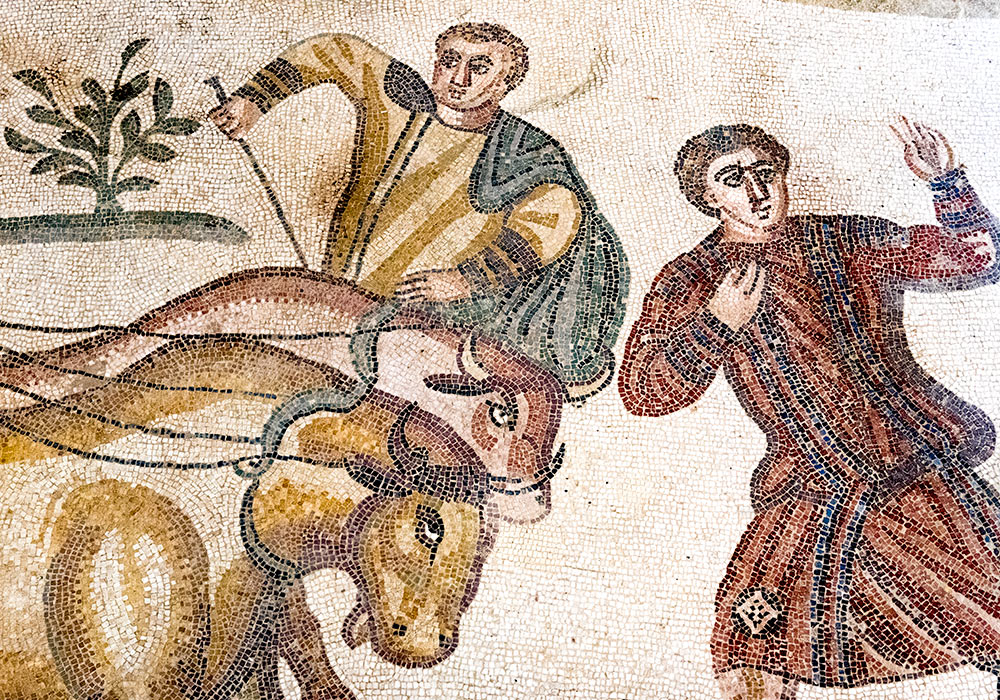
Located near Piazza Armerina in central Sicily, Villa Romana del Casale is one of the island’s most treasured UNESCO World Heritage Sites. Recognized for its extraordinary mosaics and architectural complexity, it stands as a “sublime example of a luxurious Roman villa,” offering vivid insight into the social and economic life of the late Roman Empire. Built in the early 4th century AD, the villa was at the heart of a vast latifundium—an agricultural estate used for production and political display.


Villa Romana del Casale

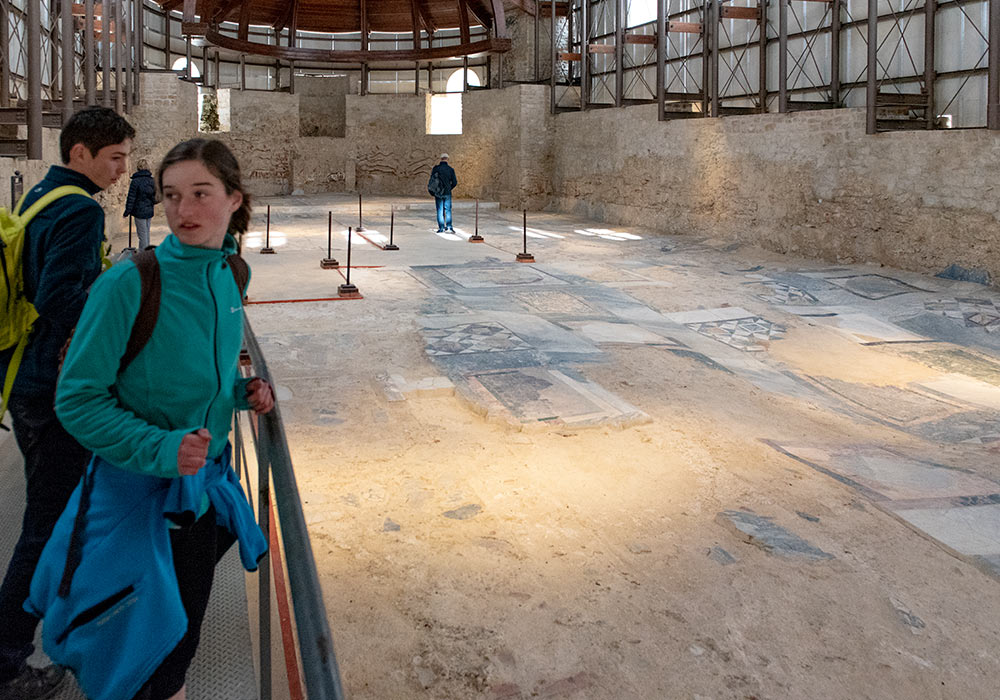
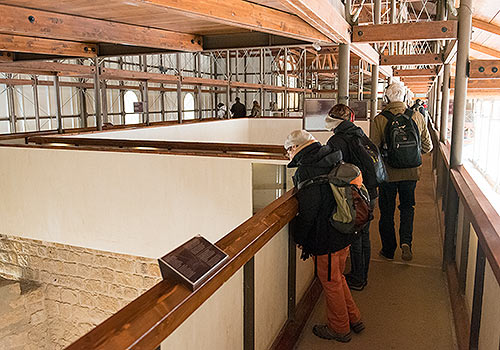
The impressive museum.


Villa Romana del Casale

Entrance to the Baths. The mosaic depicts a woman at the centre—probably the lady of the house (domina)—accompanied by her two children on their way to the baths. To the left are two household slaves: one carrying clothes for the bath, the other carrying utensils for massaging the body with oil.


Villa Romana del Casale


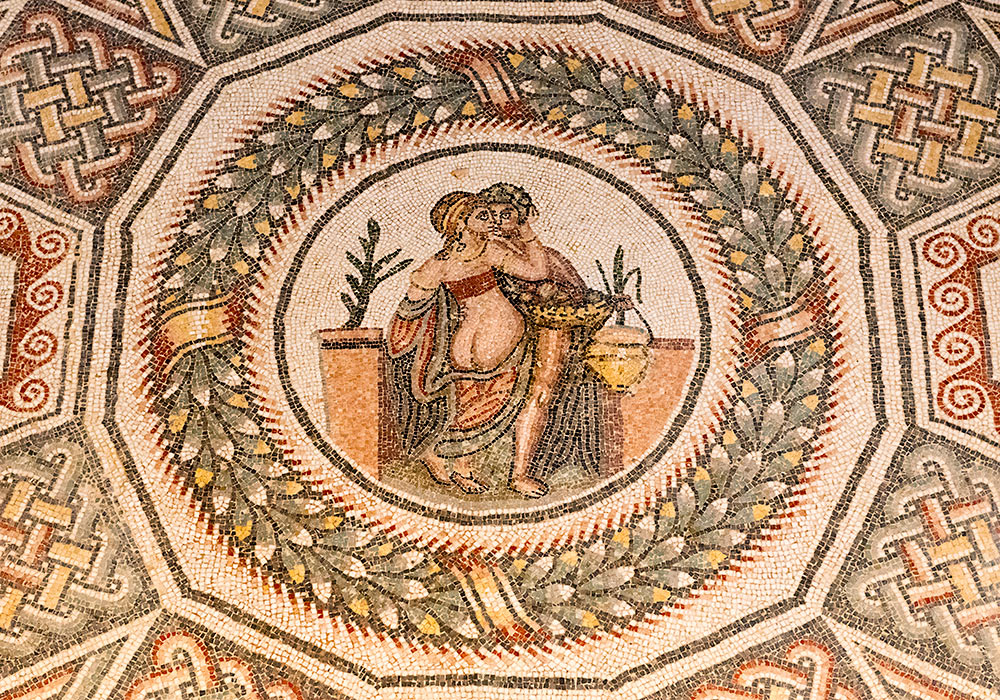
The Lovers’ Mosaic in Room 46

Love scene. Villa Romana del Casale (Piazza Armerina)

The Lovers’ Mosaic in Room 46. The woman's hair is pulled up and she has a Junoesque stature with wide hips, which, according to Giuseppe di Giovanni, shows the Ancient Roman's taste in women at the time. It gave women status to be overweight since it was a way to show off the wealth of the family, the importance of the husband and the prosperity of his business. The man is carrying a basket of fruit.

At the exact center of Room 46, a circular medallion framed by a richly decorated garland shows an intimate scene of two lovers engaged in a kiss. This erotic-themed mosaic has led some scholars to suggest that this room may have been part of the dominus’ private apartment. The central medallion is surrounded by panels and triangles with lozenge patterns (diamond-shaped or rhombus-like), roundels with garlands, hexagons, and a wave-like motif containing busts of the personified Seasons, as well as baskets of fruit enclosed in flower-garlanded circles. A rectangular recess on the north side of the room features mosaics with geometric decoration.

The romans in Sicily …


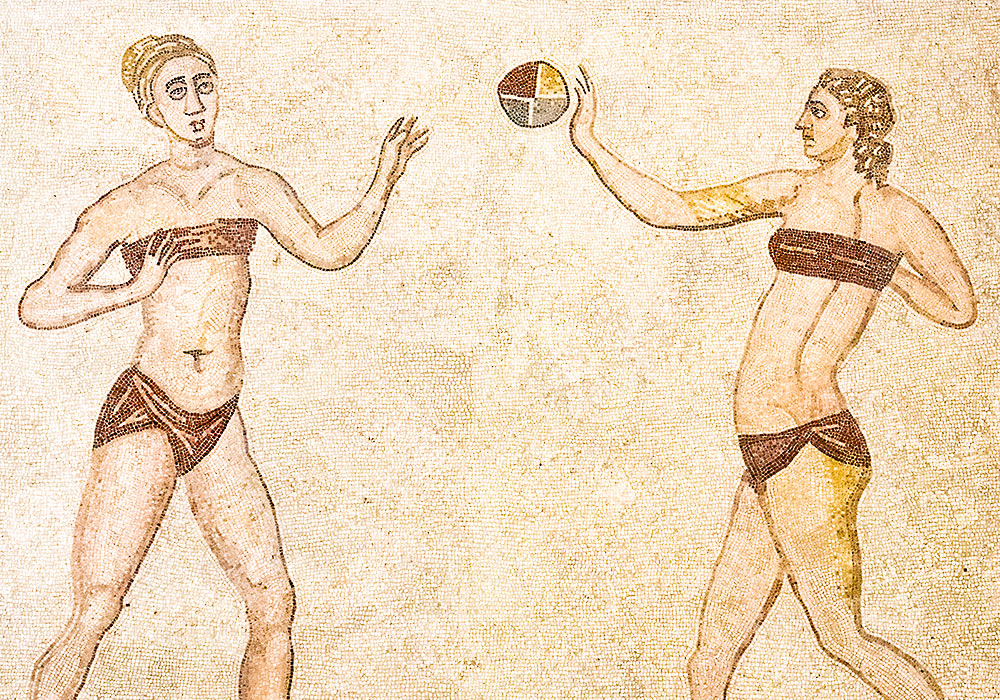
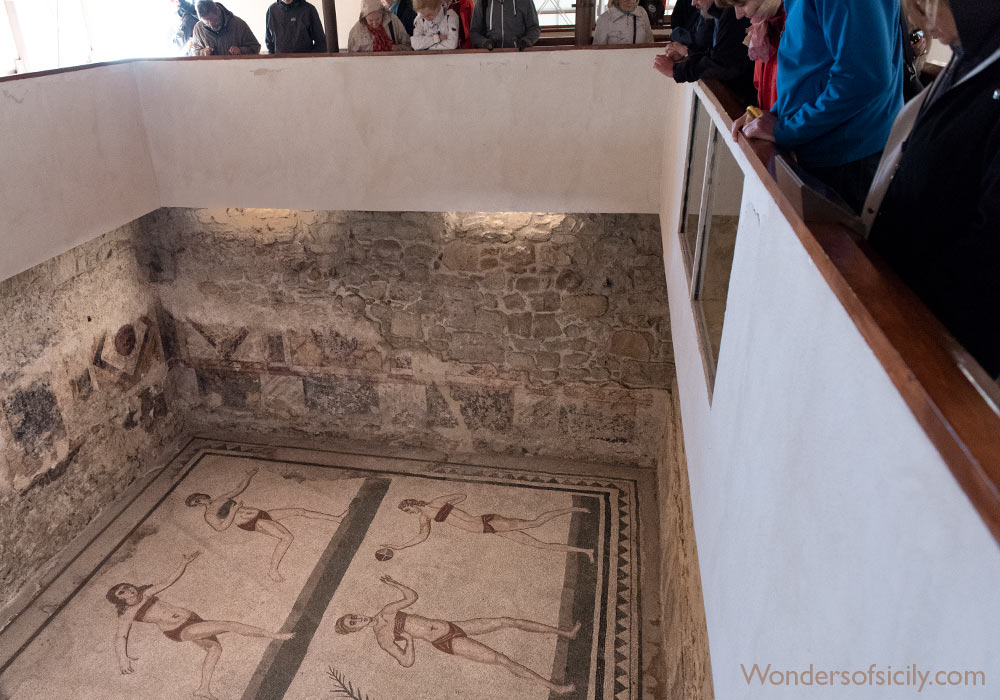
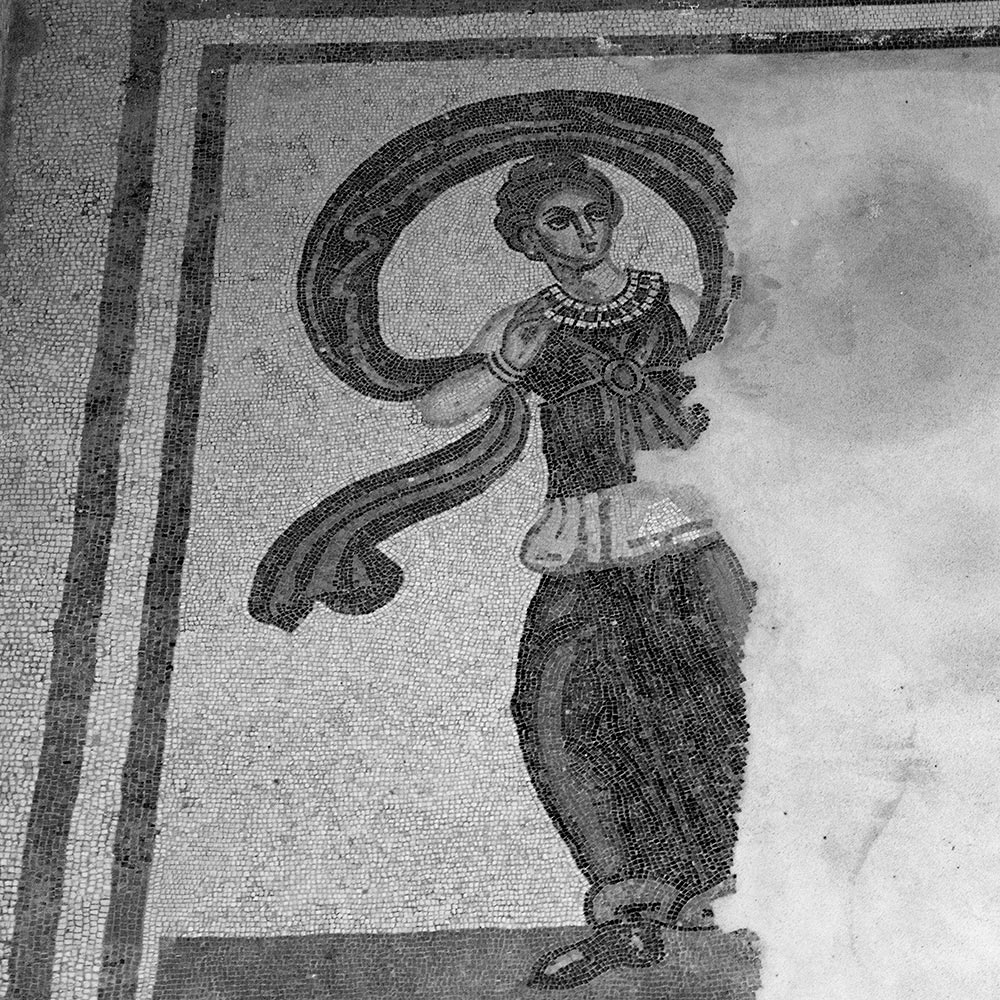
The “Bikini Girls” in Villa Romana del Casale

The "Bikini Girls". Villa Romana del Casale (Piazza Armerina)

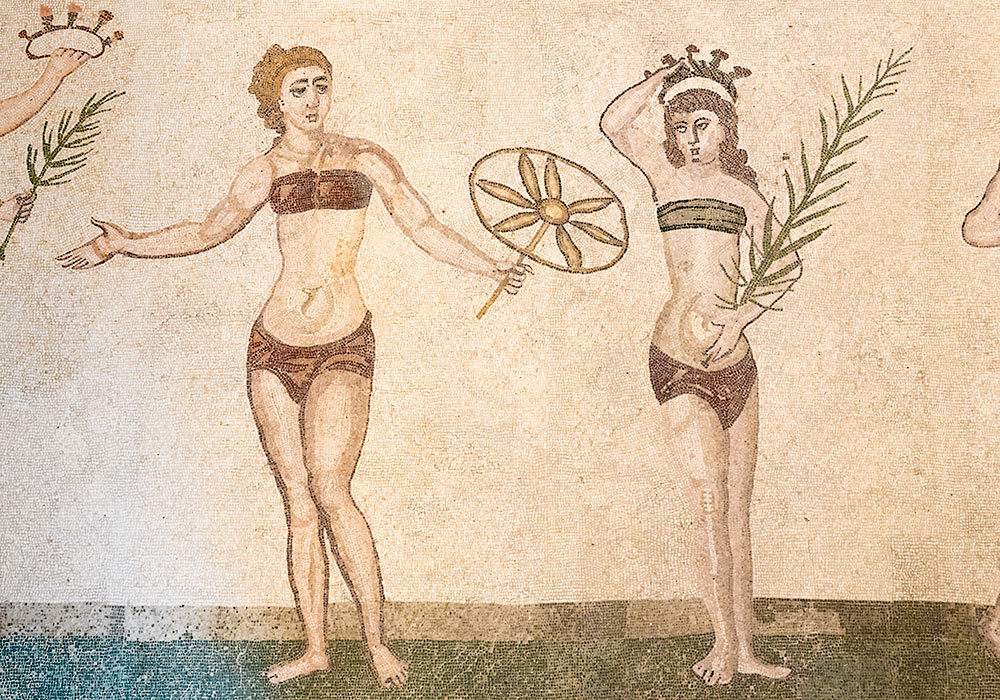
The iconic “Bikini Girls” playing with a coloured ball. They are taking part in an Olympic pentathlon competition.


Bikini girls at Villa romana del Casale

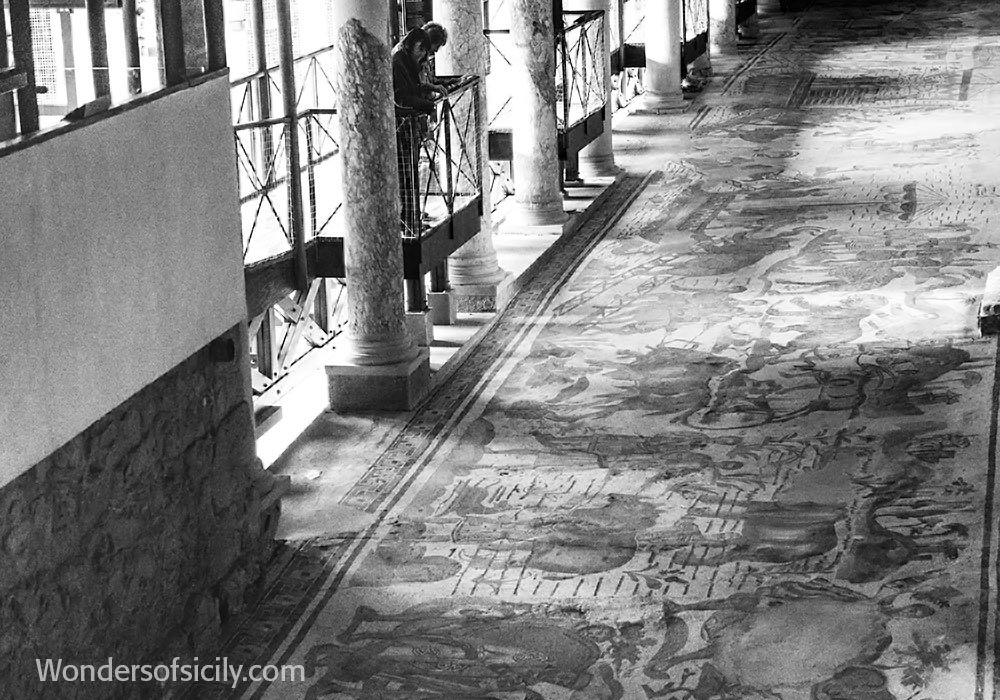
Unlike other ancient mosaic collections relocated to museums, the decision was made to preserve the mosaics in their original setting, allowing visitors to experience the villa as an immersive whole.


The Bikini Girls at Villa Romana del Casale (Piazza Armerina)

The mosaic depicting bikini-clad sportswomen is one of the main attractions of the Villa Romana del Casale.


Wealthy and powerful Roman aristocrat

Although once thought to be an imperial residence, historians now believe Villa Romana del Casale belonged to a wealthy and powerful Roman aristocrat, possibly a praefectus urbi—governor of Rome. The scale and sophistication of the structure reflect both economic might and intellectual refinement. With vast warehouses, public and private baths, grand reception halls, and ornate dining areas, the villa was designed to impress high-ranking guests and effectively administer its agricultural operations. The mosaic scenes throughout the estate reflect the dominus' rank and values, showing him as both a cultured intellectual and an elite landowner. While his identity remains uncertain, all proposed candidates share senatorial status and high administrative roles in Rome.


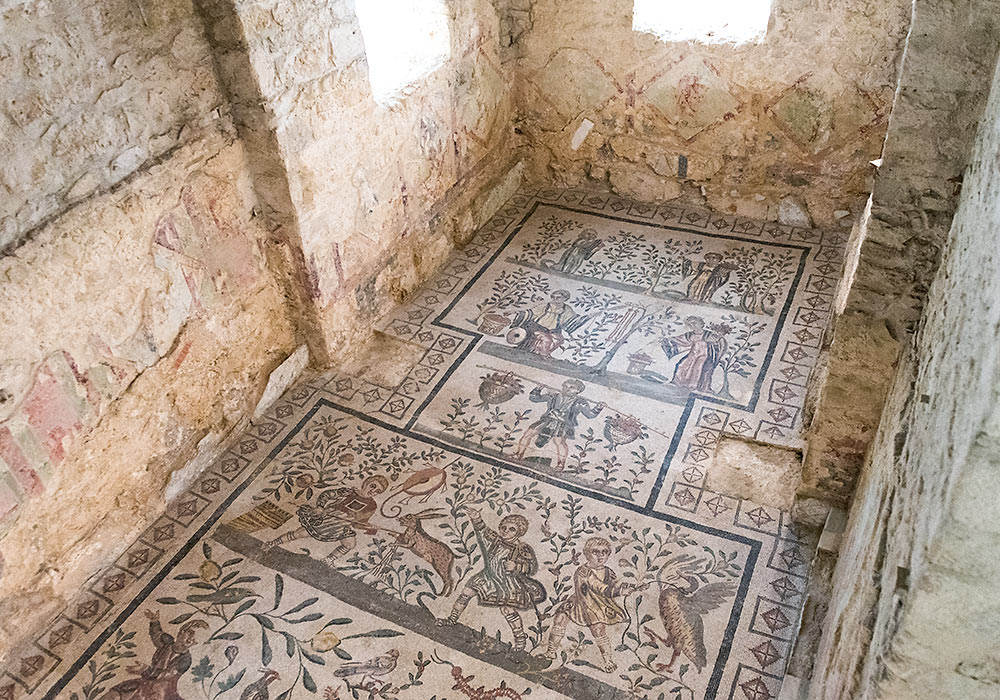
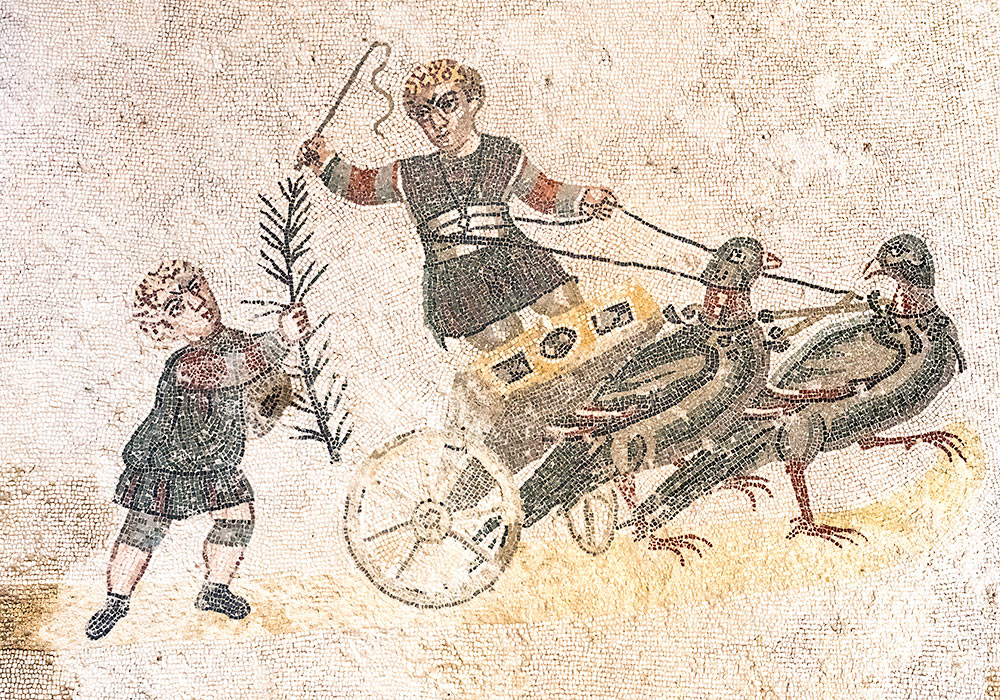
Children staging a chariot race with doves pulling the cart

mosaic of a chariot with birds, Villa romana del Casale

Mosaic from a child’s room, depicting children playfully reenacting a chariot race—riding in a cart pulled not by horses, but by large ducks. A charming example of Roman humor and the villa’s attention to everyday life, even in the quarters of its youngest residents.


chariot with birds, Villa romana del Casale

Mosaic from a child’s room, showing children staging a chariot race with doves pulling the cart instead of horses. A delightful glimpse into Roman playfulness and the imaginative world of elite children in late antiquity.


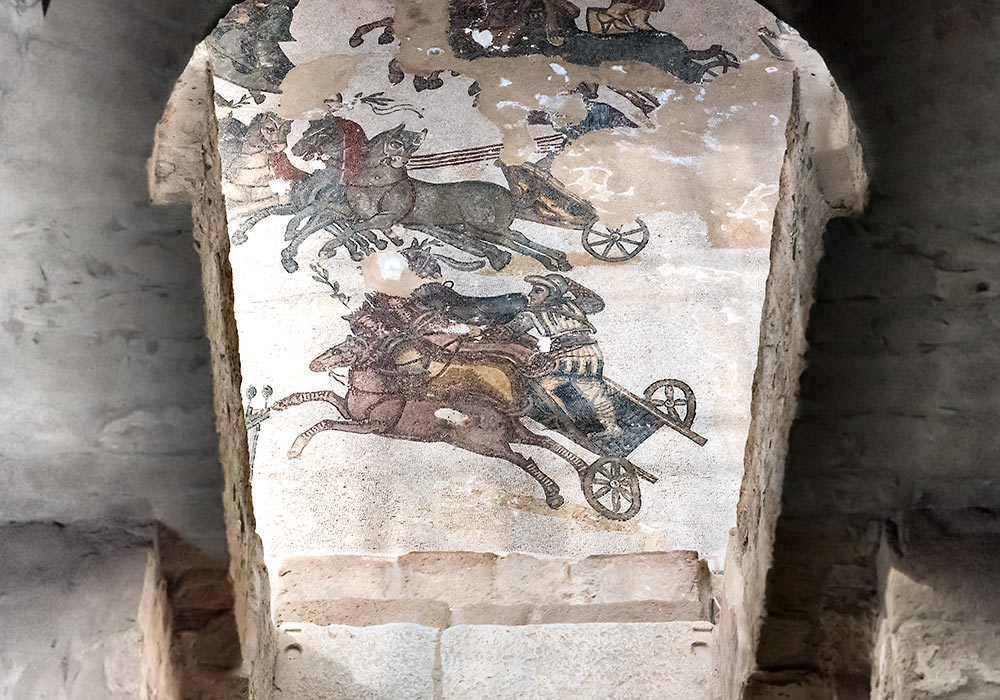
Chariot racing, mosaic. Villa Romana del Casale, Piazza Armerina

Chariot racing (in Latin: ludi circenses) was a very popular Roman sport. Each chariot was pulled by four horses.


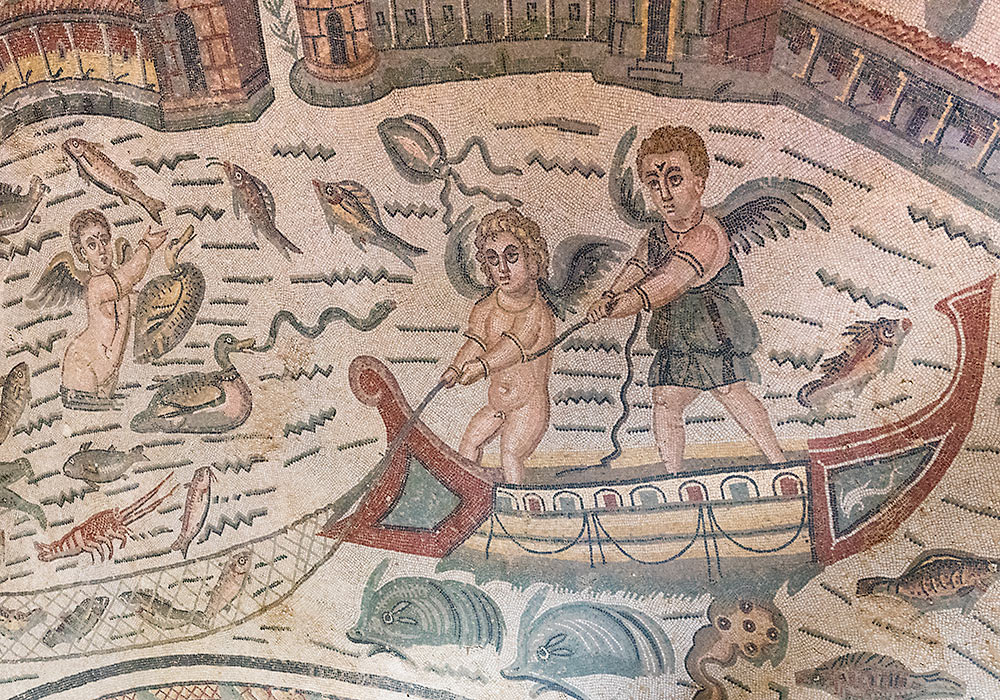
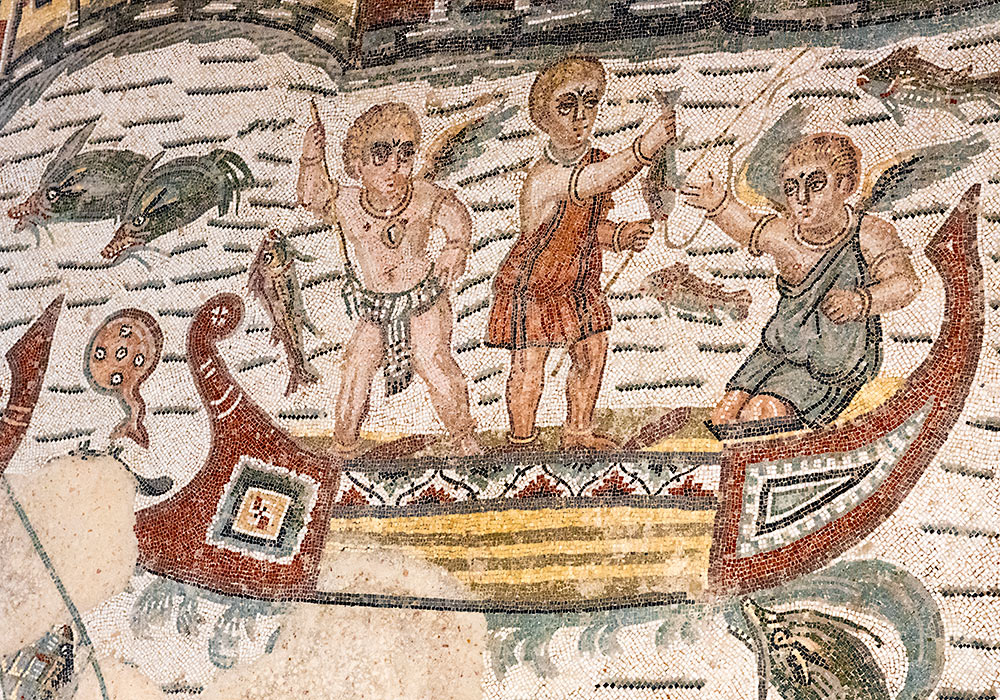
Erotes fishing

Erotes fishing, Villa Romana del Casale

This beautifil mosaic shows Erotes fishing. In this version, not all the Erotes are nude; they are shown fishing with nets or tridents from low, shallow boats. In the background, a series of semicircular colonnades is depicted frontally, creating the impression of a port encircling the entire room.

floor mosaic, Villa romana del Casale

Fishing scene: Erotes fishing. Mosaic floor in Villa Romana del Casale, Piazza Armerina.

The romans in Sicily …

The Basilica

Villa Romana del Casale (Piazza Armerina)
Scholars have noted the Basilica at the Villa Romana del Casale as an architectural parallel to the Constantinian Basilica in Trier, constructed in the early 4th century.


The Great Hunt – Mosaics of hunting scenes

hunting scene at Villa Romana del Casale, Sicily

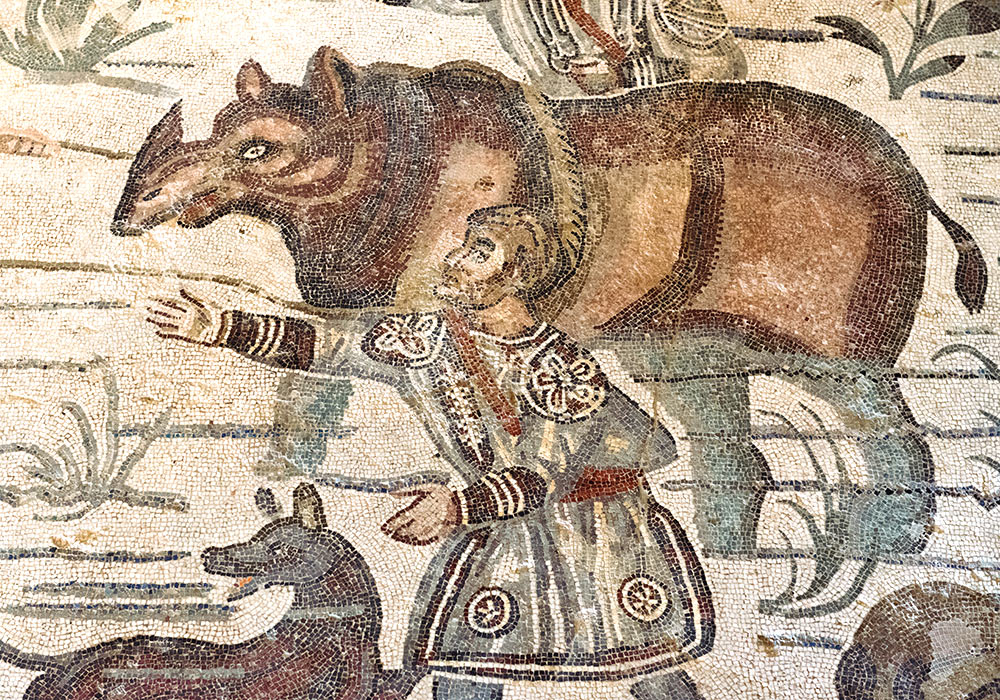
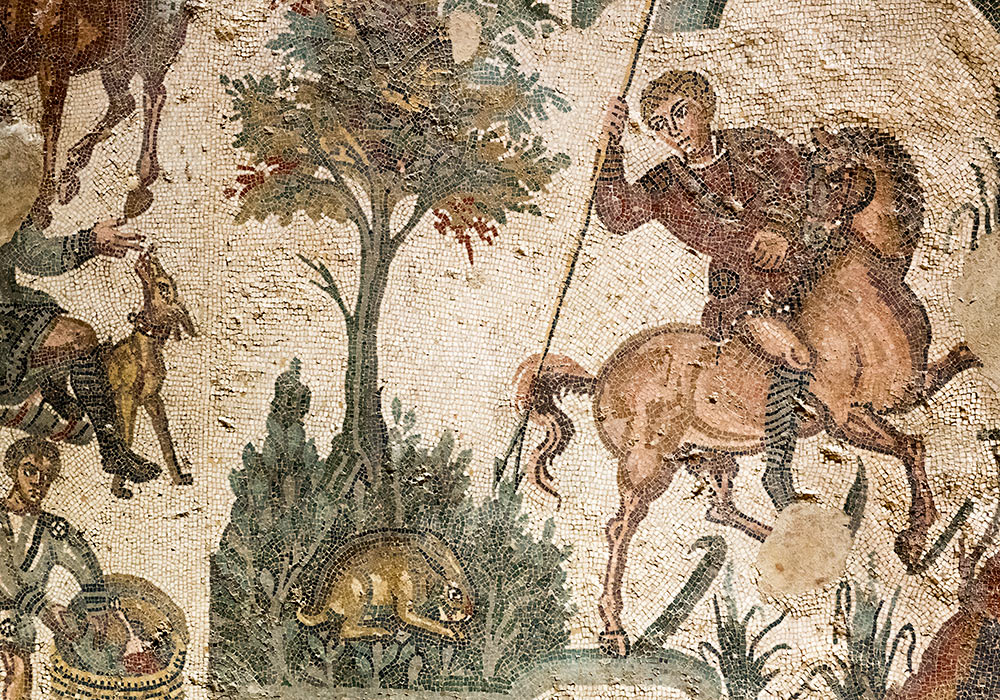
Hunting scene at Villa Romana del Casale, Sicily.


Mosaic floor in Villa Romana del Casale

Mosaic floor in Villa Romana del Casale.


Mosaic floor in Villa Romana del Casale

Mosaic floor in Villa Romana del Casale.


Villa Romana del Casale (Piazza Armerina)

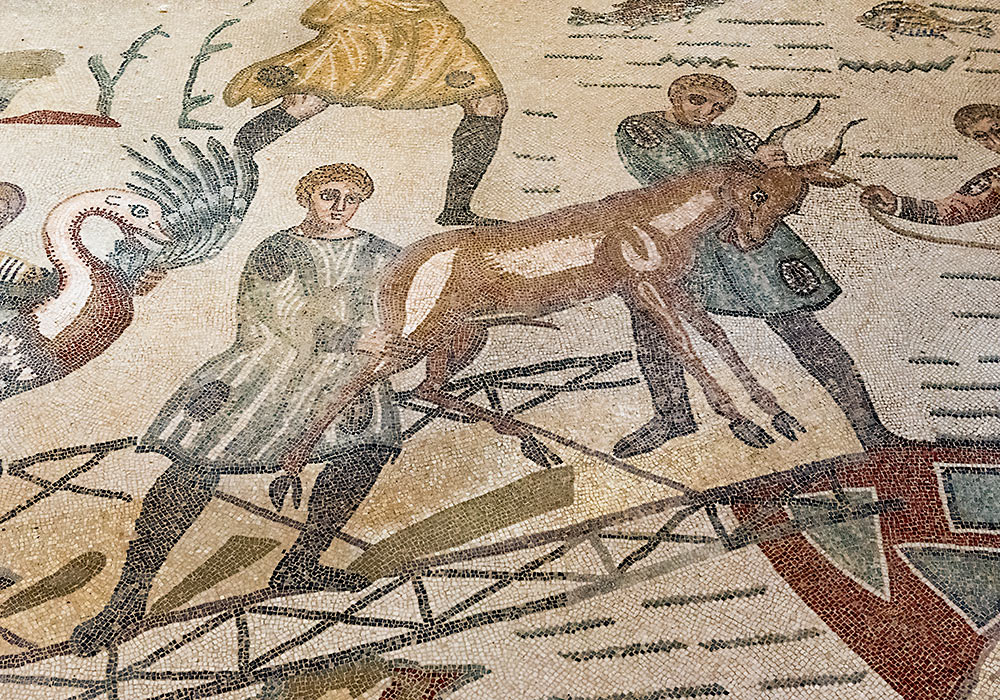
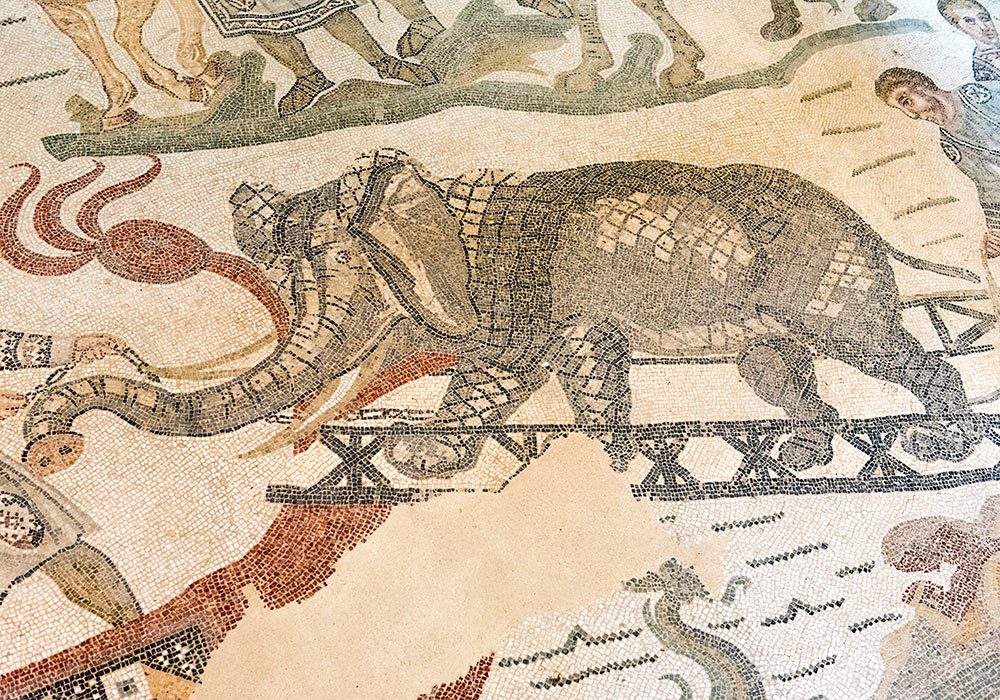
Detail of the “Great Hunt” mosaic, showing a ship departing from the port of Alexandria, Egypt.

A ship is shown being loaded and unloaded with animals, under the supervision of three men depicted on land between the two vessels. These three figures have been interpreted as members of the Tetrarchy, as Maxentius with two of his officials, or as a procurator ad elephantos (“elephant keeper” in imperial service) accompanied by two praepositi (subordinate officers). In any case, the land between the two seas is thought to represent Italy, and the scene likely depicts the port of Ostia.


Villa Romana del Casale (Piazza Armerina)

Beast in the water.


Villa Romana del Casale (Piazza Armerina)

Hunting scene at Villa Romana del Casale.


Villa Romana del Casale

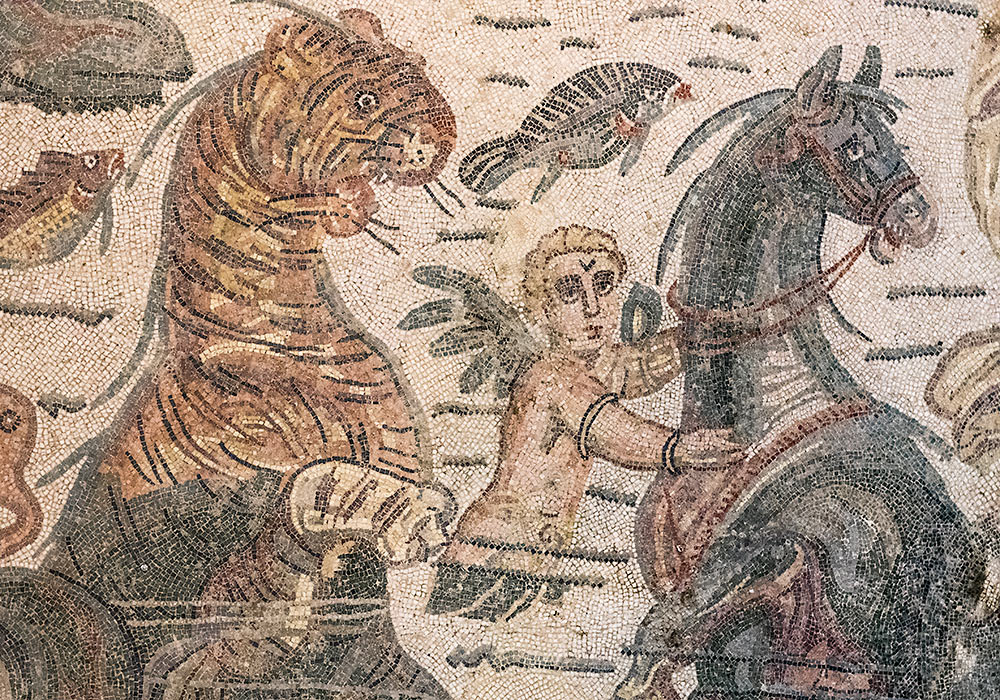
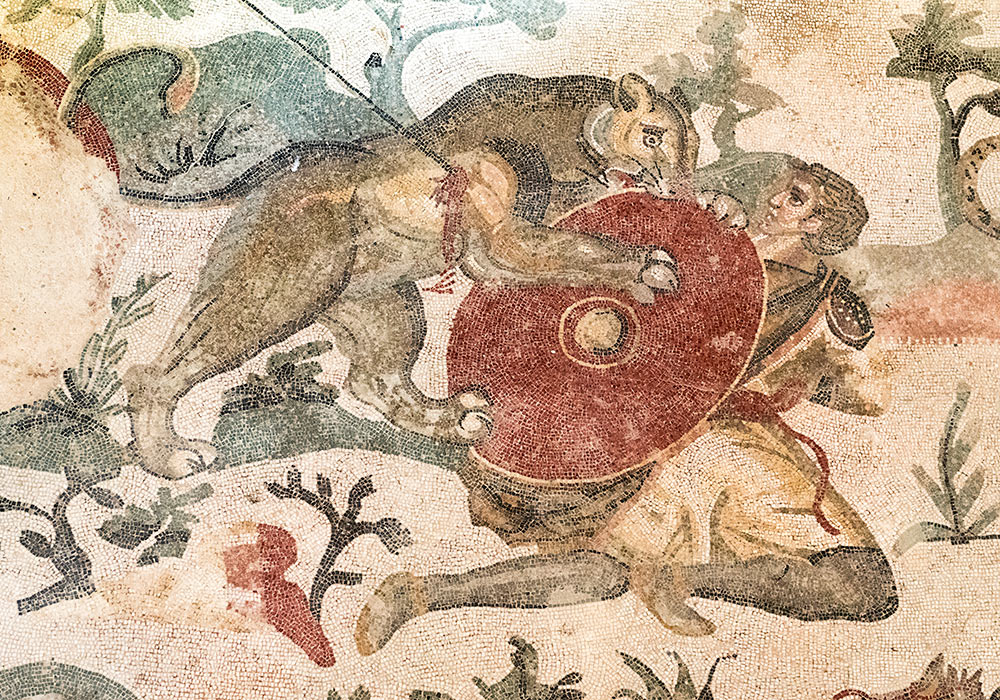
A wounded lion attacks.


Sicily – the first Roman province

Sicily was the first Roman province, annexed in 227 BC following the First Punic War. For centuries it served as the granary of the Republic and Empire, until Egypt supplanted it in that role after 30 BC. This shift brought a decline in Sicilian fortunes, with much of the countryside falling under the control of absentee landowners and plagued by banditry. Only in the early 4th century AD, during Constantine’s reign, did the island begin to flourish again, its strategic location transforming it into a key Mediterranean trade hub. In this revitalized context, the Villa Romana del Casale was constructed, likely atop the ruins of a 1st-century farm destroyed by earthquake. Positioned along the ancient road between Catania and Agrigento, and near the mansio of Philosophiana, the villa rose as a symbol of renewed prosperity and Roman ambition.


Animal protomes

All around room 13 the mosaics feature two rows of square panels, each containing circular laurel wreaths enclosing animal protomes (such as deer, lions, goats, bulls, horses, ostriches, elephants, and more). The animals’ heads change direction near the vestibule entrance and beside the stairways leading to the double-apsed corridor: they face south toward the triclinium and north toward the baths and private chambers.


mosaic

A wild boar.


mosaic, Villa romana del Casale

A tiger.


Mosaics in the Villa romana del Casale

Mosaic in Villa Romana del Casale, Piazza Armerina

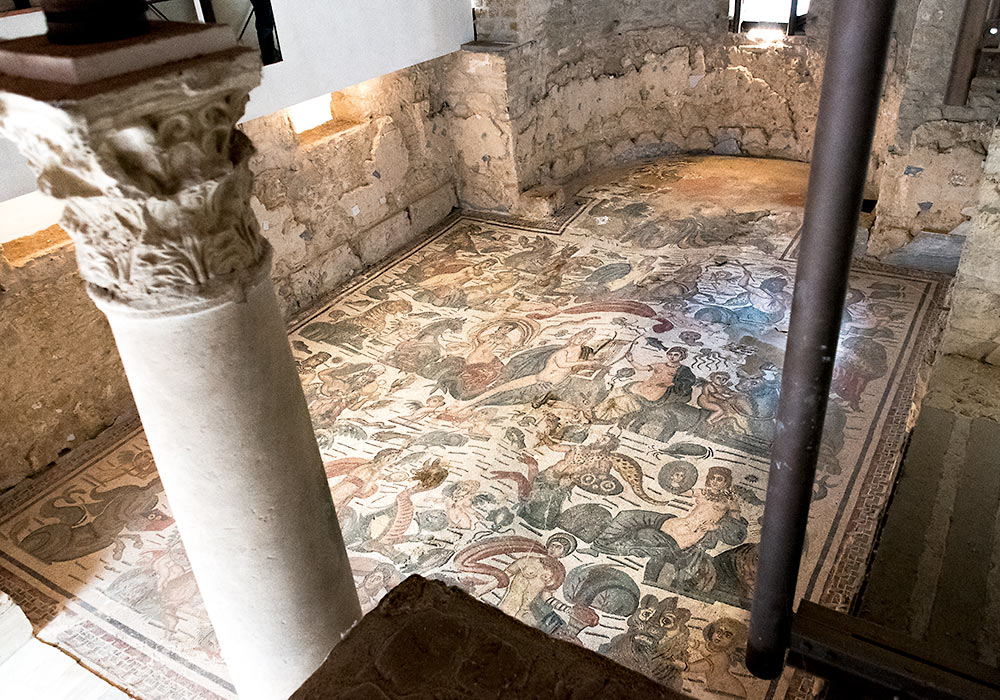
Mosaic floor in Villa Romana del Casale, Piazza Armerina.


Mosaic in Villa Romana del Casale, Piazza Armerina

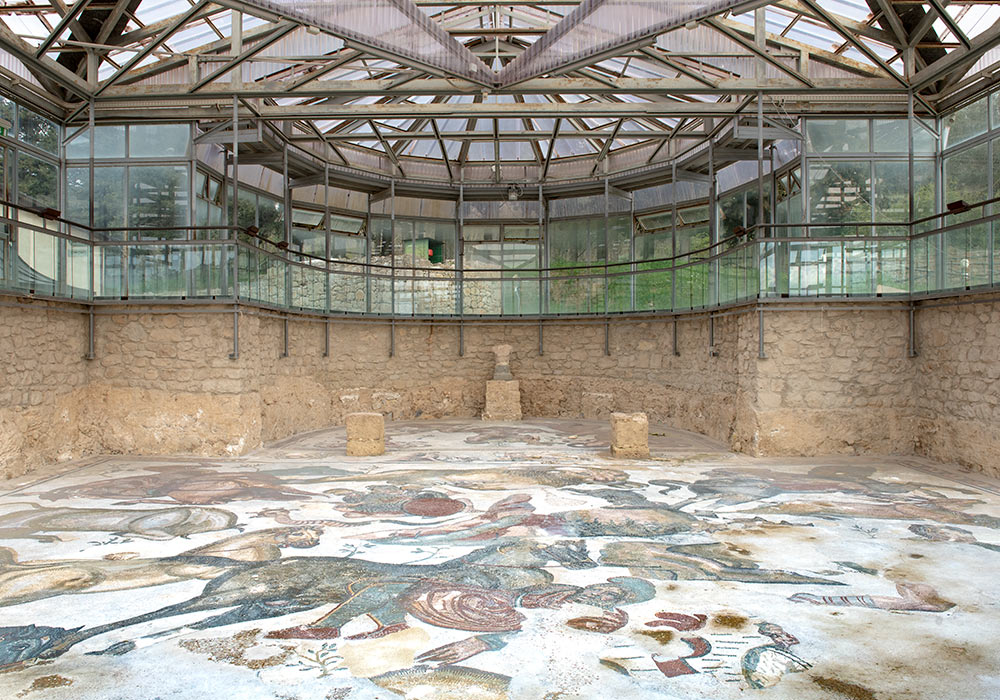
Mosaic floor in Villa Romana del Casale, Piazza Armerina.
The romans in Sicily …


The Hall of Orpheus

Villa Romana del Casale (Piazza Armerina)

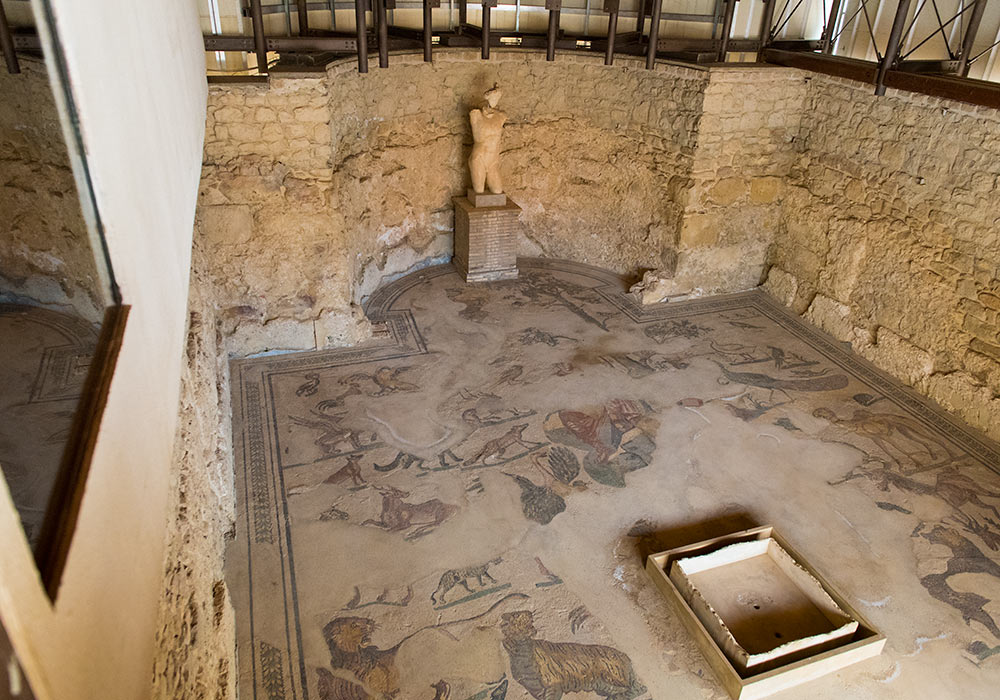
The apse of the Hall of Orpheus contains the base of a statue of Apollo. Situated in close proximity to the so-called Room of the Bikini Girls, the hall may have served as the audience chamber of the residing family’s son, complementing the Great Basilica, which would then have been associated with the father. Alternatively, it may have been used for leisure and cultural pursuits, such as listening to music and poetry or engaging in literary reading.

At the centre of the hall originally stood a fountain. The floor is entirely covered by a mosaic depicting the mythological figure Orpheus charming wild animals with the sound of his lyre. Surrounding Orpheus are a variety of animals rendered in remarkable detail, including an elephant, a dromedary, a bear, several antelopes, a lion, a tiger, a peacock, a goose, a porcupine, and a lizard, among others. Many of these creatures are of African origin. Mythical beasts, such as the phoenix and the griffin, are also represented. The scene is generally interpreted as an allegory of the triumph of human intellect—embodied in music and poetry—over the untamed forces of nature. Whereas Arion subdues the creatures of the sea, Orpheus exerts his influence over terrestrial animals. The function of the Hall of Orpheus remains the subject of scholarly debate.


The Hall of Arion

Villa Romana del Casale (Piazza Armerina)

According to Herodotus, the musician Arion won a competition in Sicily and, on his return from Tarentum, was threatened by sailors intent on stealing his prizes. Allowed a final song, he played his kithara in praise of Apollo, attracting dolphins—one of which carried him to Cape Tainaron. Received by Periander of Corinth, Arion exposed the sailors by appearing at the dolphin’s monument when they falsely swore he was dead. The sailors were executed, and Apollo honoured Arion’s musical skill by placing him and the dolphin among the stars as the constellation Delphinus.


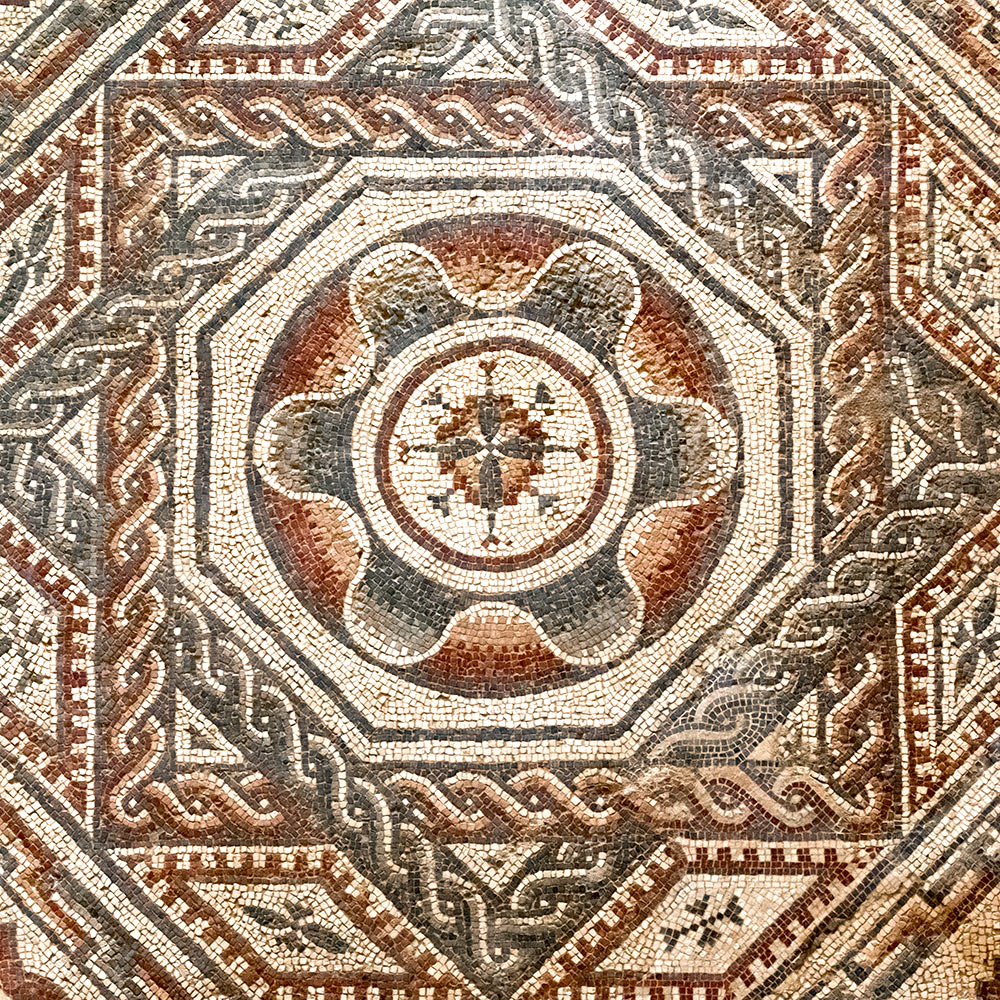
Solomon’s Knot and other eometrical patterns

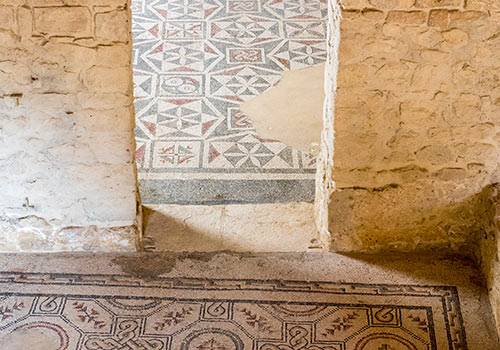
Geometrical patters in the mosaic.


Observe the mosaics featuring Solomon’s knot set against a black background. The simplicity of the design in this room suggests it may have been a functional space, intended for work rather than elaborate decoration.


Solomon’s Knot

Solomon’s Knot is an ancient geometric motif made of two interlaced, closed loops forming a symmetrical and repeating figure. Unlike the infinity symbol, it consists of two distinct bands that weave through each other to create four rounded corners, often giving the impression of a square. The design is perfectly symmetrical both horizontally and vertically. Widely used in Roman and medieval mosaics, architecture, and decorative art, Solomon’s Knot is rich in symbolism—representing eternity, unity, stability, and wisdom. Its simplicity and balance made it a favored pattern for both sacred and functional spaces across many cultures throughout history.


Villa Romana del Casale (Piazza Armerina)


More photos

Villa Romana del Casale (Piazza Armerina)


Villa Romana del Casale (Piazza Armerina)


Photos of the Museum

Villa Romana del Casale (Piazza Armerina)


Villa Romana del Casale (Piazza Armerina)

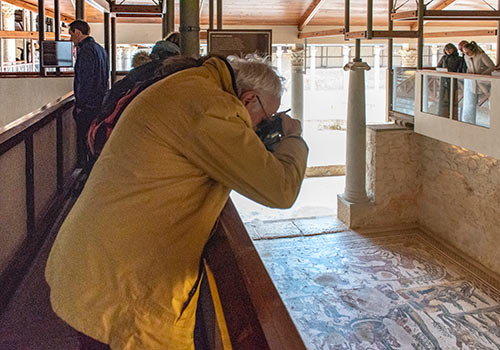
One of the finest museums in Sicily.
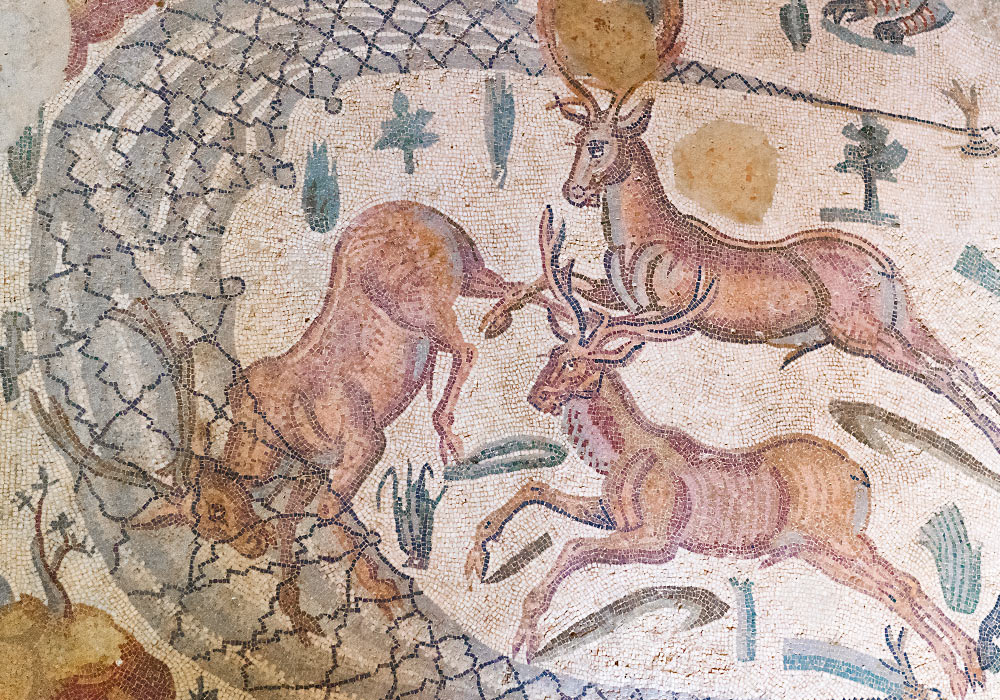
 

Mosaic floor in Villa Romana del Casale, Piazza Armerina


Villa Romana del Casale (Piazza Armerina)


Sources

  • Enzo Cammarata: The Roman Villa of Casale: Historical Facts and Curiosities (Edition 2013)
  • The Blue Guide Sicily
  • Giuseppe di Giovanni: Piazza Armerina: The Roman Villa of Casale (Edition 2014)
  • UNESCO.org


Villa Romana del Casale is one of the most luxurious of its kind. It is especially noteworthy for the richness and quality of the mosaics which decorate almost every room; they are the finest mosaics in situ anywhere in the Roman world. (Video by UNESCO TV/NHK)