Monreale - the Benedictine Cloister
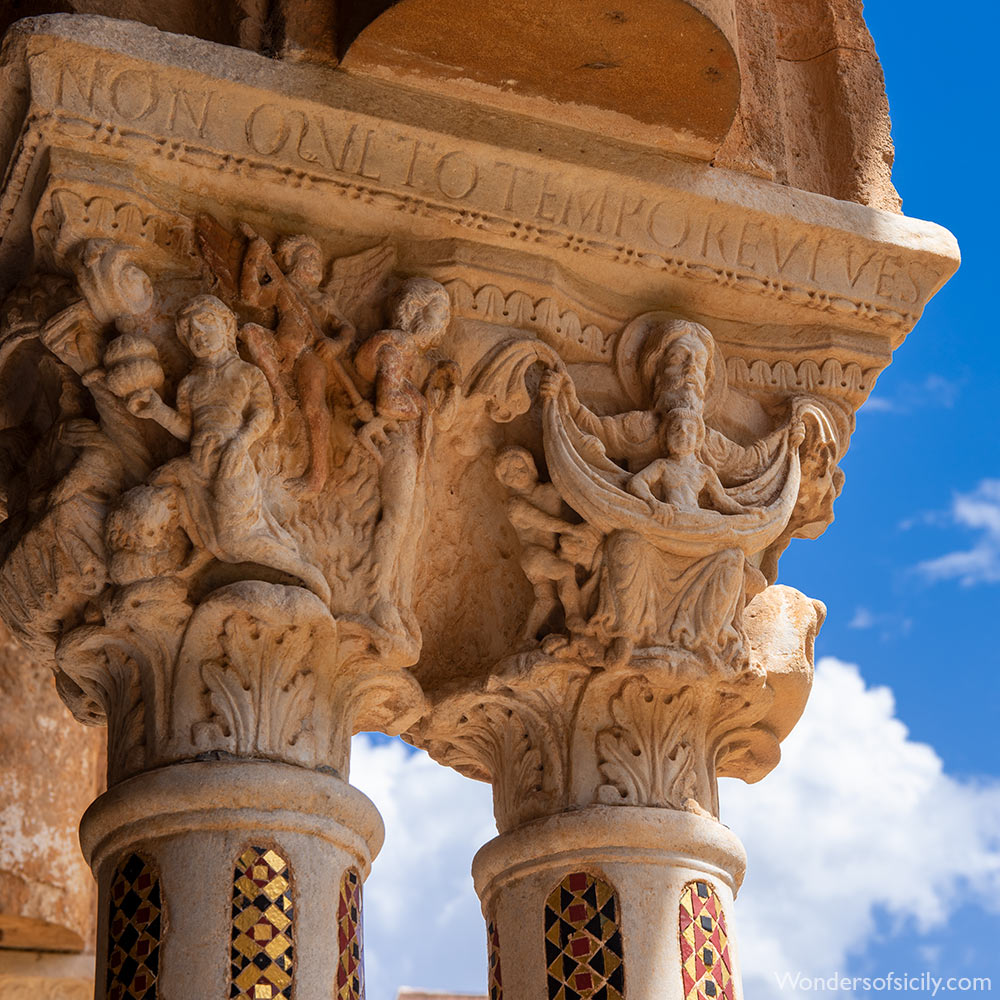
The parable of the rich man and the leper Lazarus is recounted in four episodes and is accompanied by a narrative inscription that runs along the impost block: + O DIVES DIVES / NON MVLTO TEMPORE VIVES / FAC BENE DVM VI / VIS POST PORTEM VIVERE SI VIS. (North Side - N8Sh7)
To the left the rich man is is atoning for his sins in the fires of hell, and to the right Lazarus is resting in the bosom of Abraham.
The Benedictine Cloister in Monreale
The magnificent Benedictine Cloister in Monreale near Palermo is part of the Cathedral of Monreale, which is one of the many UNESCO World Heritage Sites in Sicily. The cloister was built in the 12th century in the Norman-Arab style, and it is one of the most important architectural and artistic treasures of the region. The columns are decorated with a series of beautifully crafted romanesque capitals depicting scenes from the Old and New Testaments (see below). Monreale with its cathedral and adjoining cloister is a popular tourist destination in Sicily.
The Cloister and its capitals
The Benedictine Cloister at Monreale (Chiostro dei Benedettini: opening hours Mon–Sat 9–6.30, Sun & holidays 9–1) was completed c. 1200. It measures 47x47 metres and is located on the south side of the cathedral. Each side has 26 arches resting on columns. The splendid capitals include narrative cycles from the Old and New Testaments.
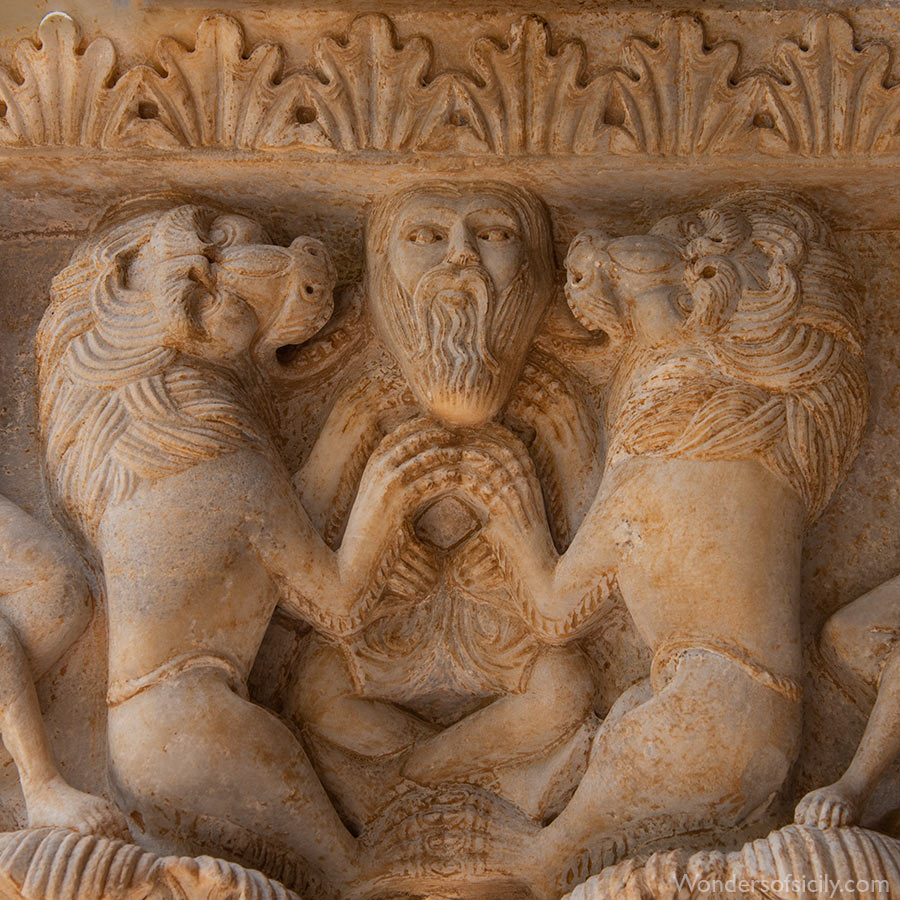
Lions attacking a bearded man (heathen? Daniel?).
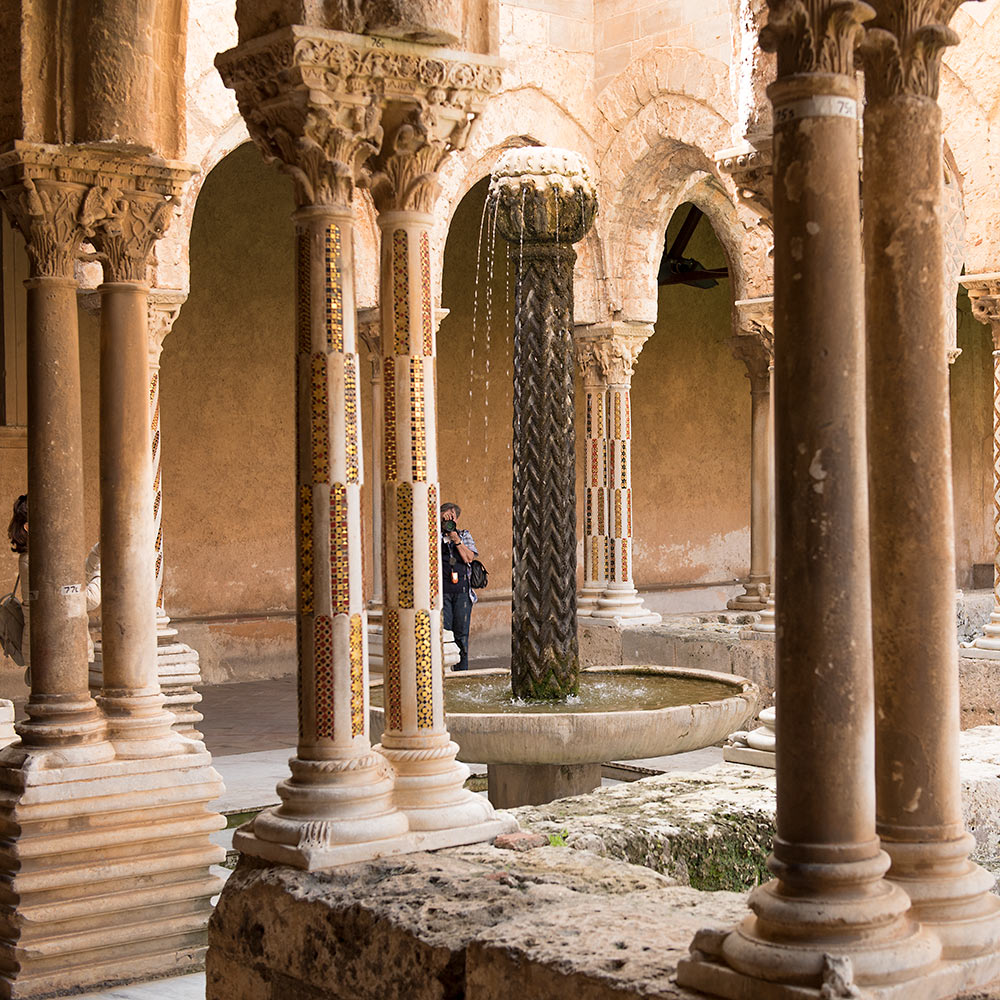
The fountain in the southwest corner of the cloister garden. The column carved like a stylised palm tree forms a fountain, used by the monks to wash their hands before entering the refectory, now a favourite pool for pigeons. The symbolism of the various elements here alludes to the rite of baptism, according to Blue Guide Sicily.
The Arab-Norman arches are borne by 228 twin columns. All columns - many of them decorated with mosaics or reliefs - have beautiful carved Romanesque capitals. The capitals are the work of five master craftsmen, according to Blue Guide Sicily, but only one capital is signed.
In medieval theological symbolism, the Cloister represents Paradise on earth.
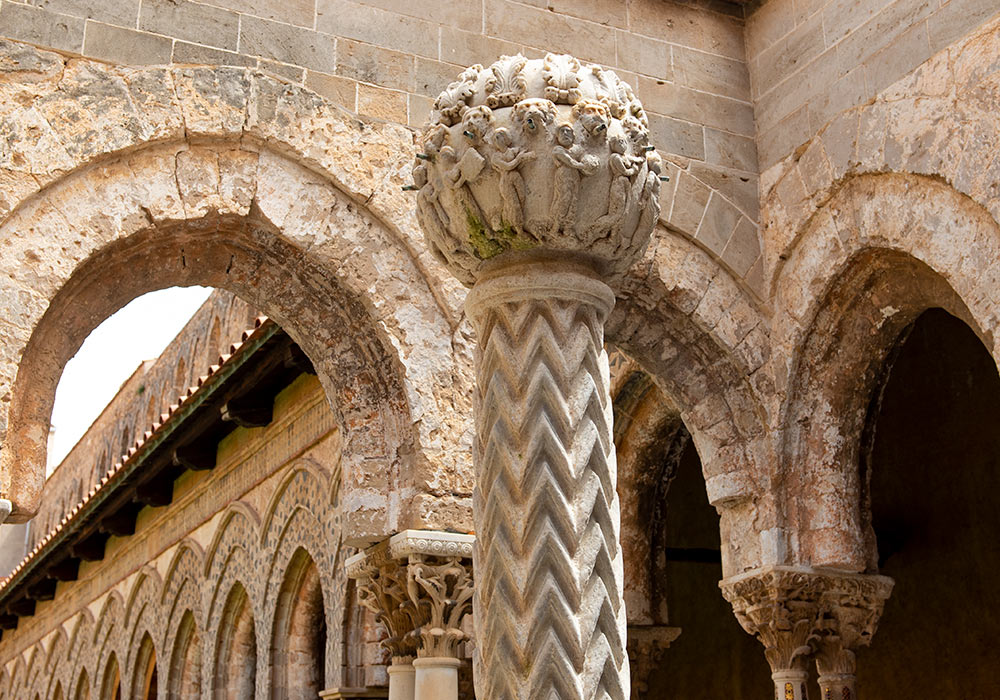
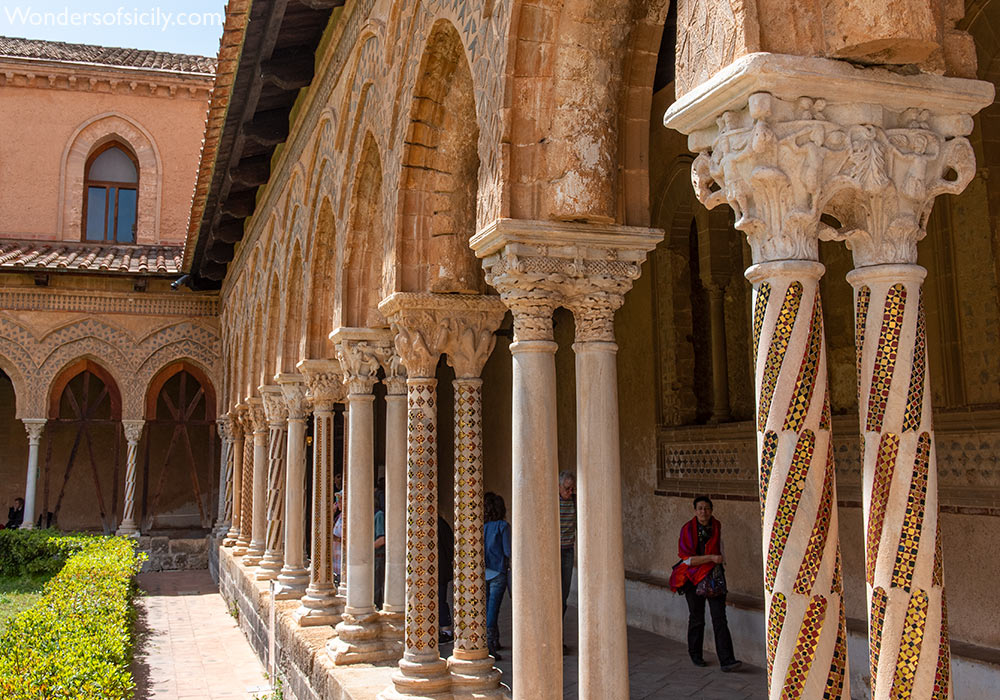
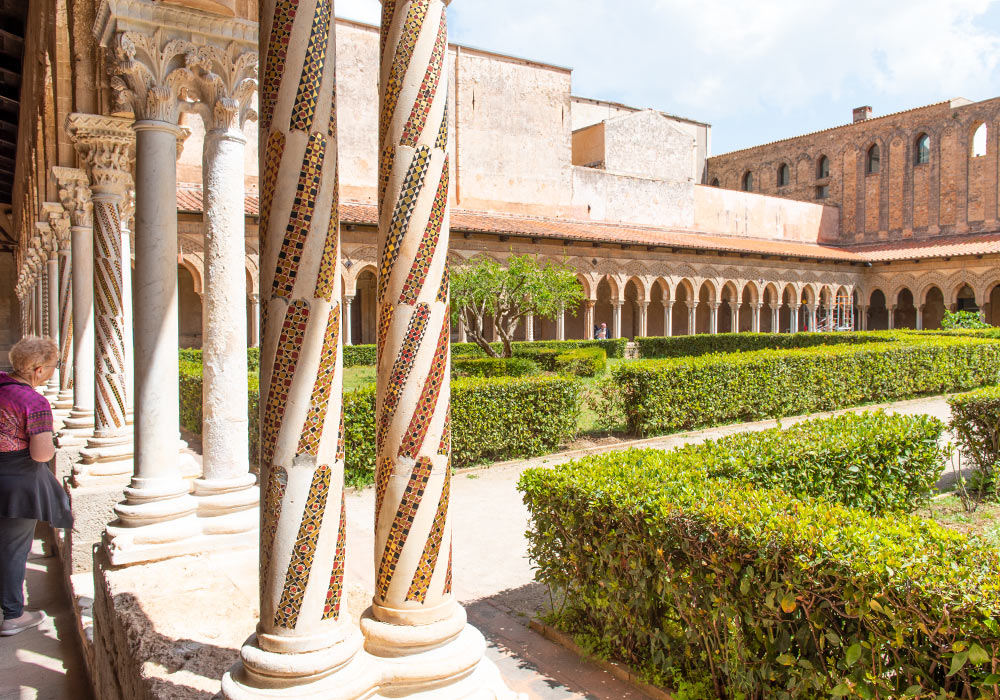
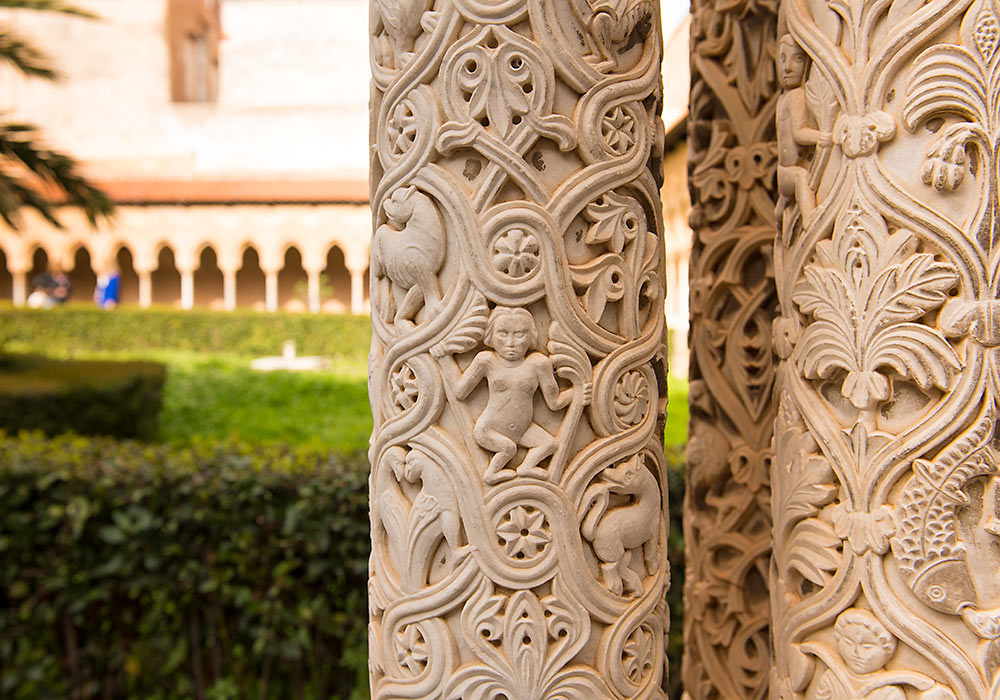
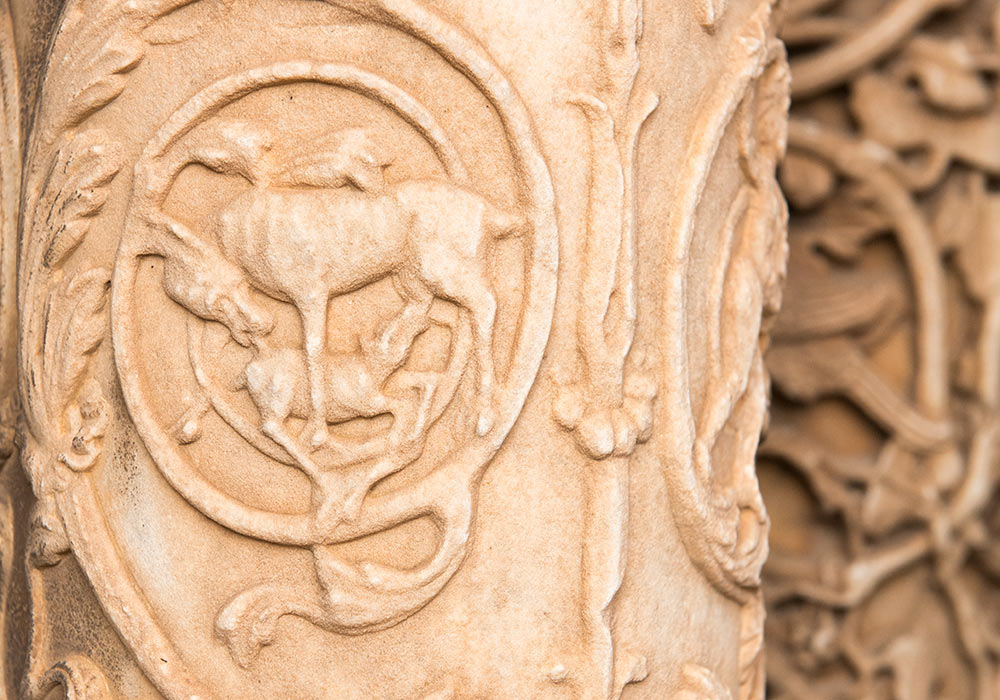
Some of the columns have beautifully carved ornaments with various motives.
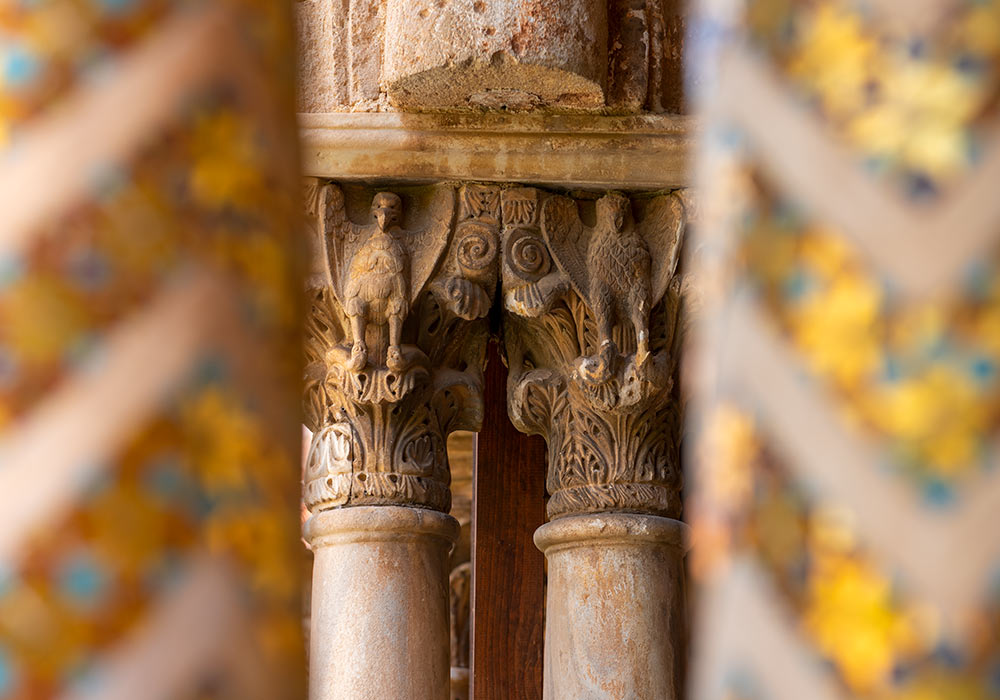
Capitals seen between two beautiful columns.
Click here for photos of the Monreale Cathedral!
Click here for photos of Monreale
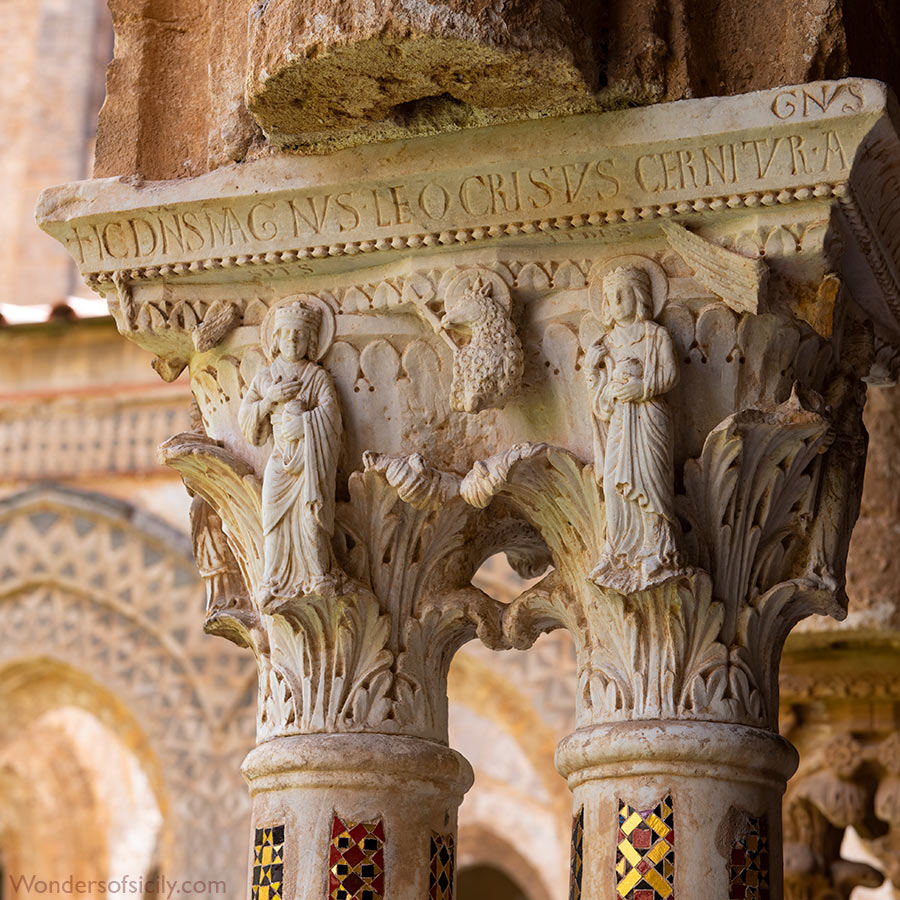
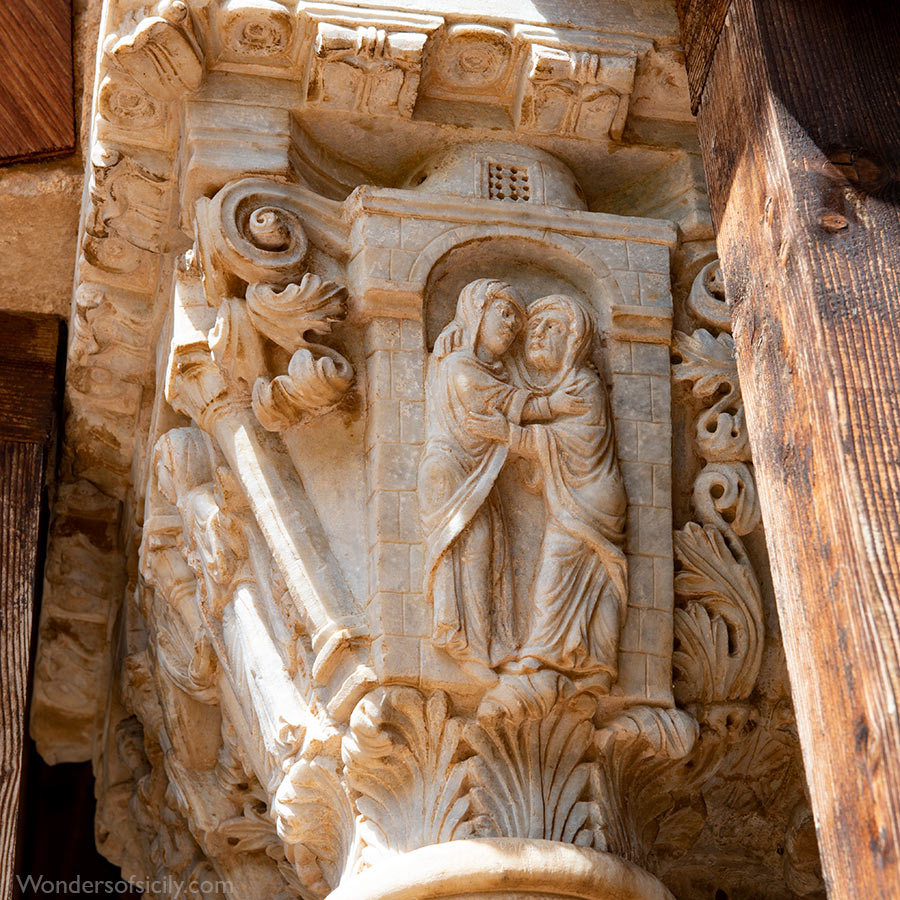
The Visitation: In Christianity, the Visitation is the visit of Mary, who was pregnant with Jesus, to Elizabeth, who was pregnant with John the Baptist, in the Gospel of Luke (1:39–56).
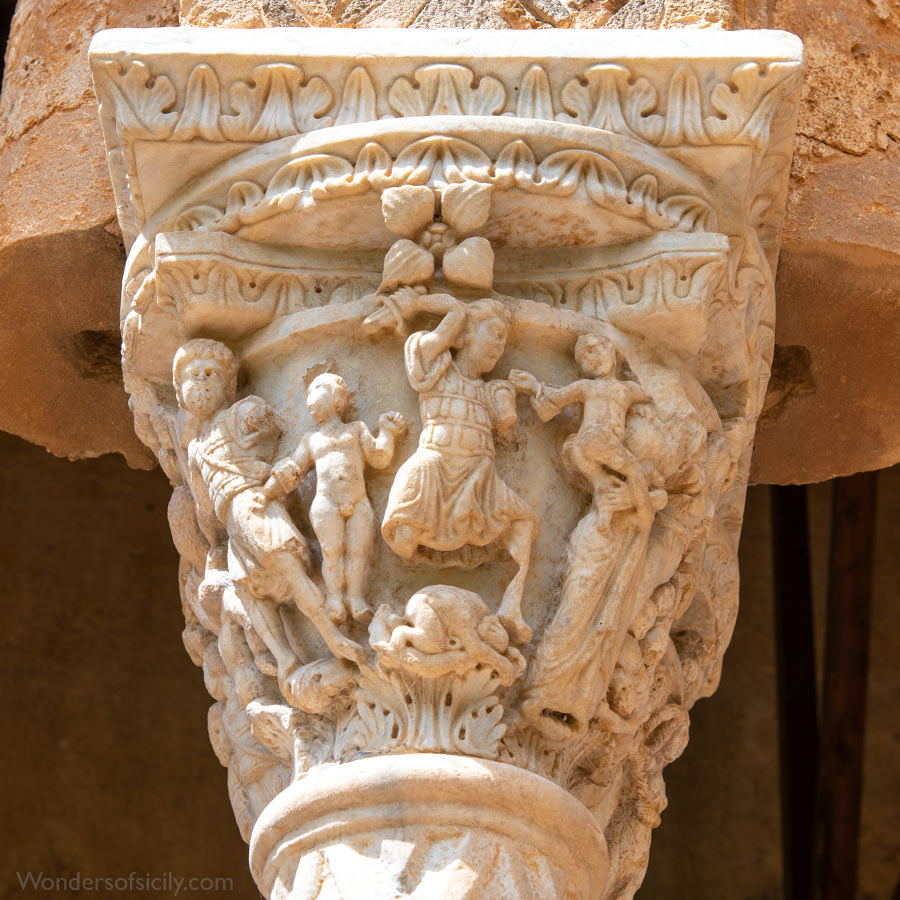
The Massacre of the Innocents (N24Sh23), depicted in Matthew 2:2–16.
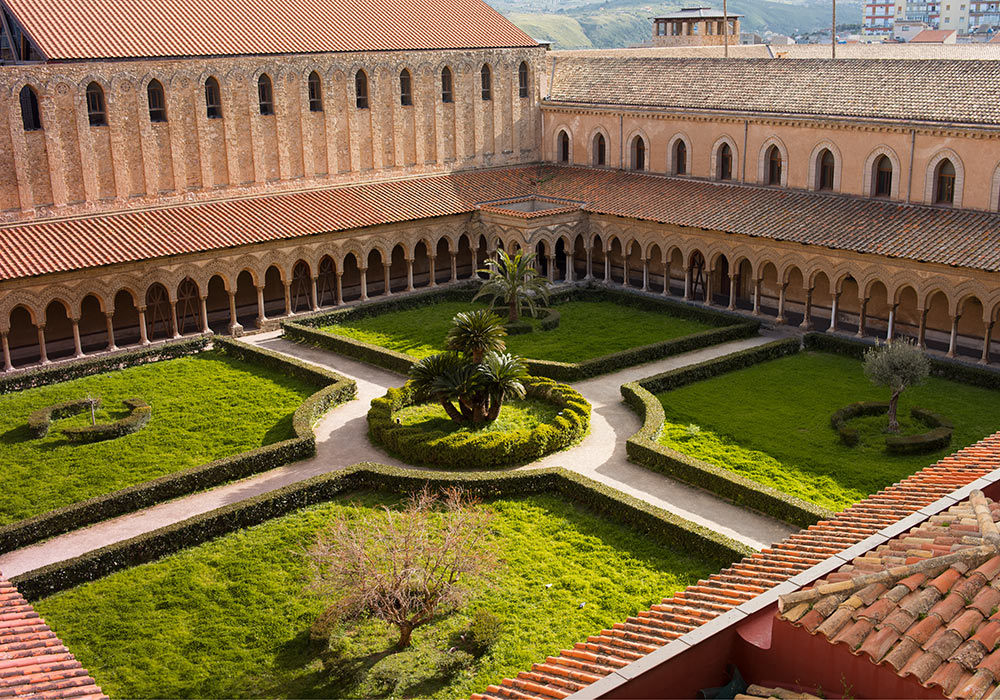
The Monreale cloister seen from the roof. The entrance to the roof is on the southwestern corner of the nave. The view of the Conca d'Oro and the coast is breathtaking from the roof, and should definitely not be missed if you have time and can manage the 180 steps. Walkways also lead around the apse of the cathedral, offering you a closer look at the mosaics that are high above the church floor.
In the garden, the monks grew fruit trees.
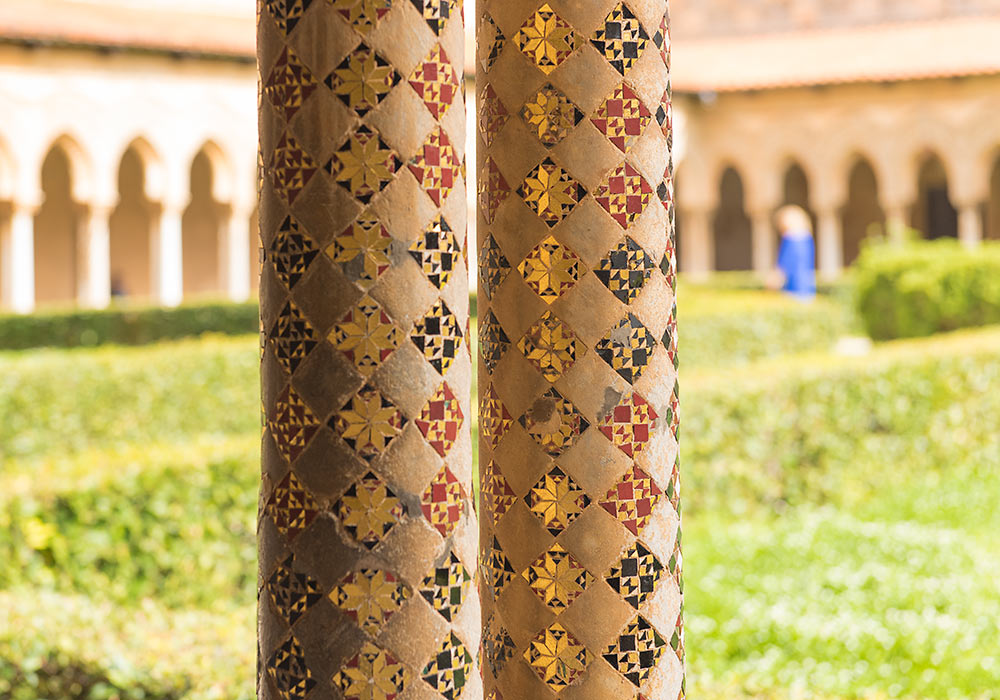
Photo: Per-Erik Skramstad / Wonders of Sicily
Capitals in the Benedictine Cloister, Monreale
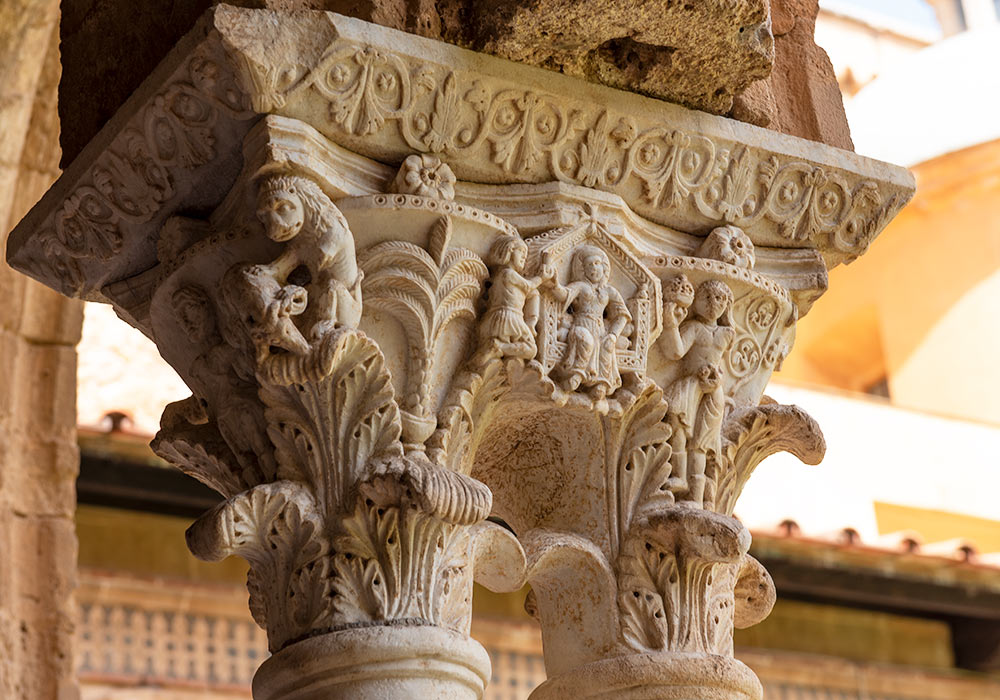
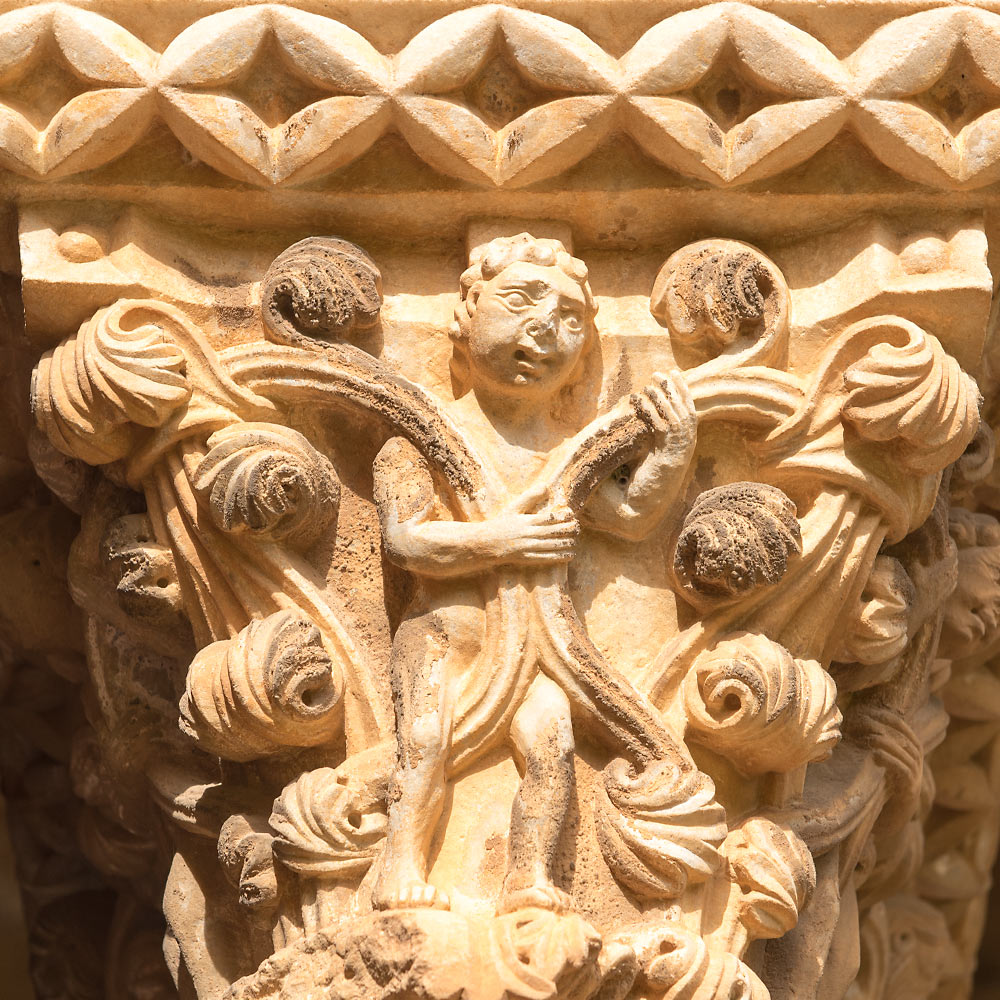
Capital, Monreale Cloister
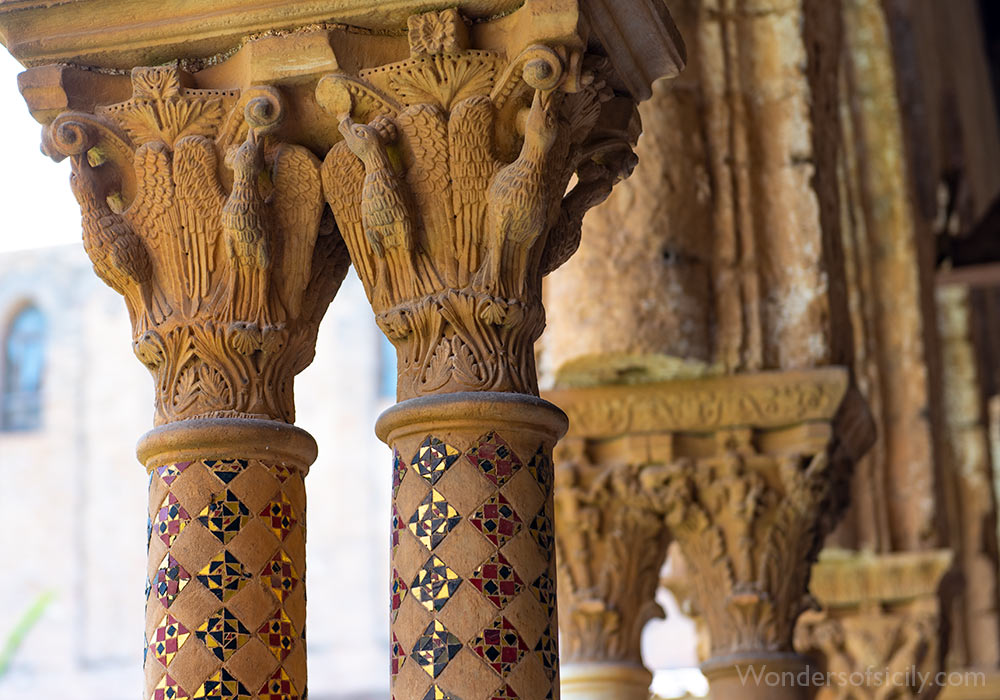
Capitals, Monreale Cloister
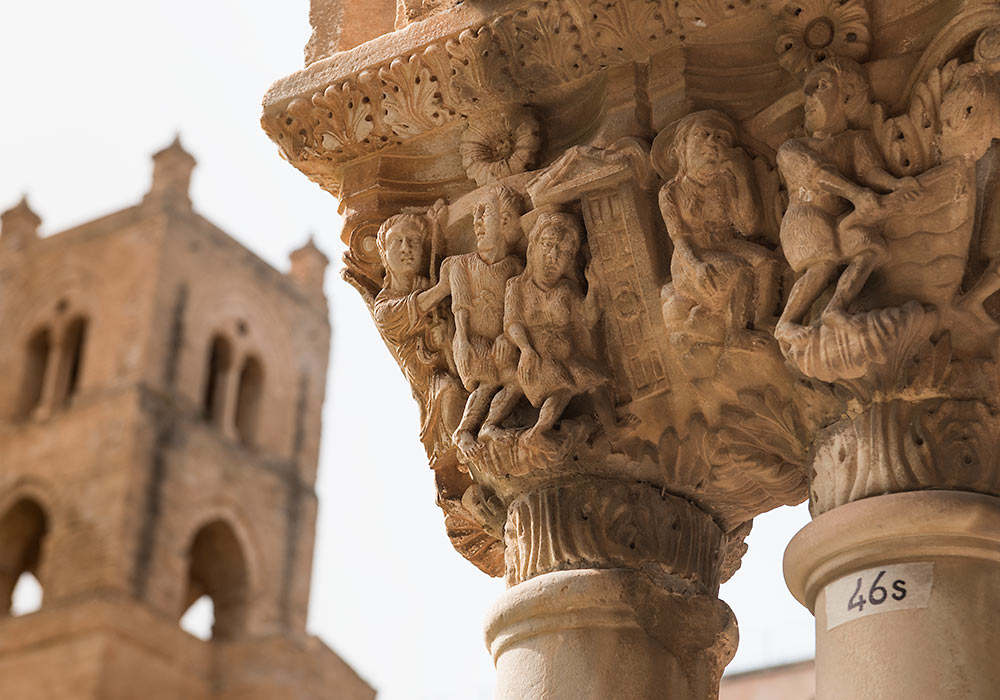
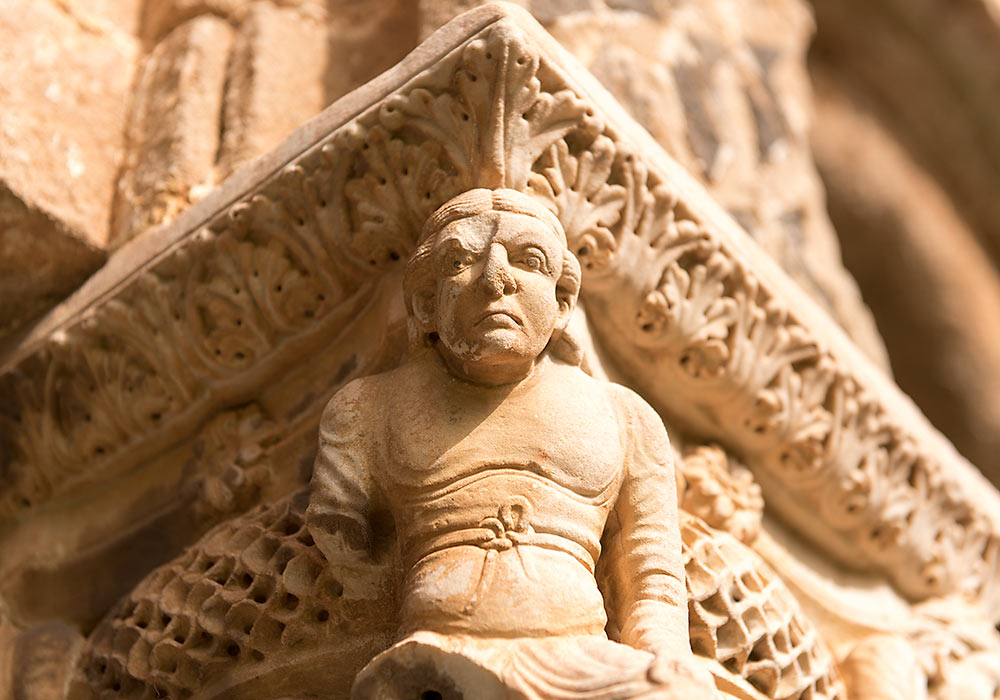
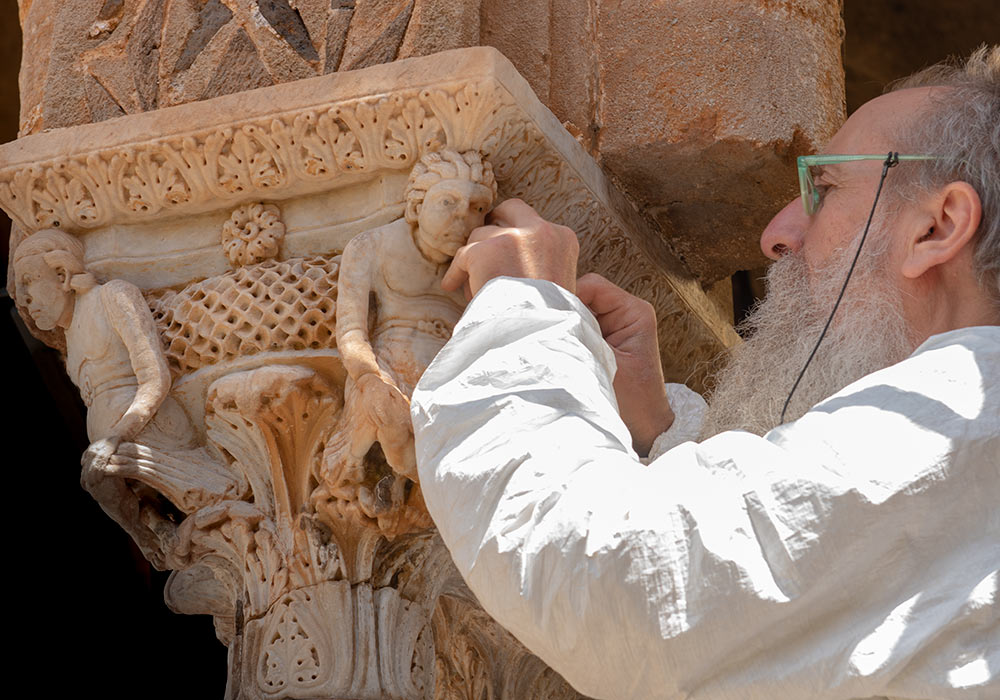
The capitals in the cloister of the abbey of Monreale were carved from white marble, but over time has acquired a thick, sandstone patina that covers them almost entirely.
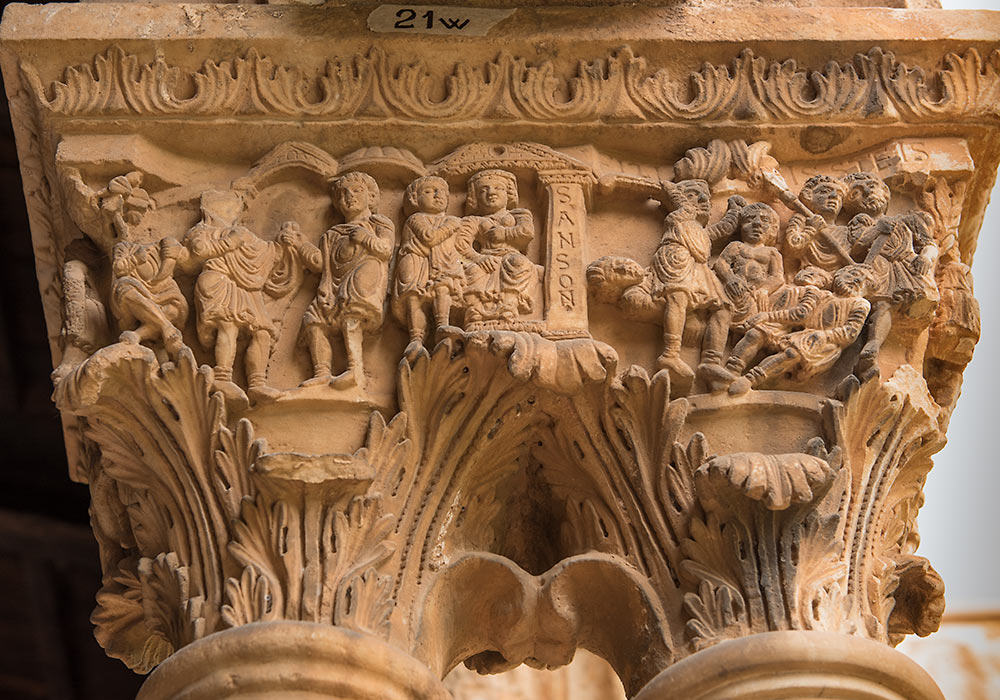
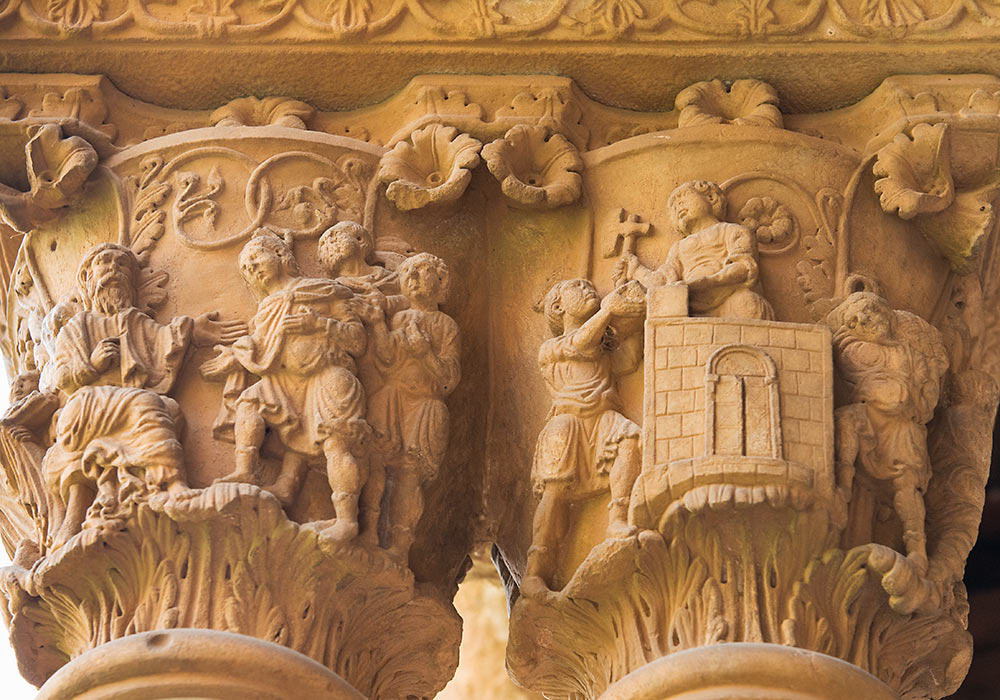
Episodes from the life of Samson constitute the central theme of this capital. The west side of the double capital combines two separate incidents: On the left is the wedding feast where Samson tells his riddle -“Out of the eater, something to eat; out of the strong, something sweet” - the answer to which is extorted from his wife. On the right Samson slaughters the Philistines, an event that he will repeat later on using the jaw bone of a ass. The name SANSON is inscribed several times on the capital. The Philistines are also designated with an inscription - FILIIS STEIS - and the east side of the capital also bears the inscribed caption: PO / NA / ANI / MA / ME / R. (Source: The Cenobium Project).
Judges 14,12-13 (King James Version) 12 And Samson said unto them, I will now put forth a riddle unto you: if ye can certainly declare it me within the seven days of the feast, and find it out, then I will give you thirty sheets and thirty change of garments: 13 But if ye cannot declare it me, then shall ye give me thirty sheets and thirty change of garments. And they said unto him, Put forth thy riddle, that we may hear it.
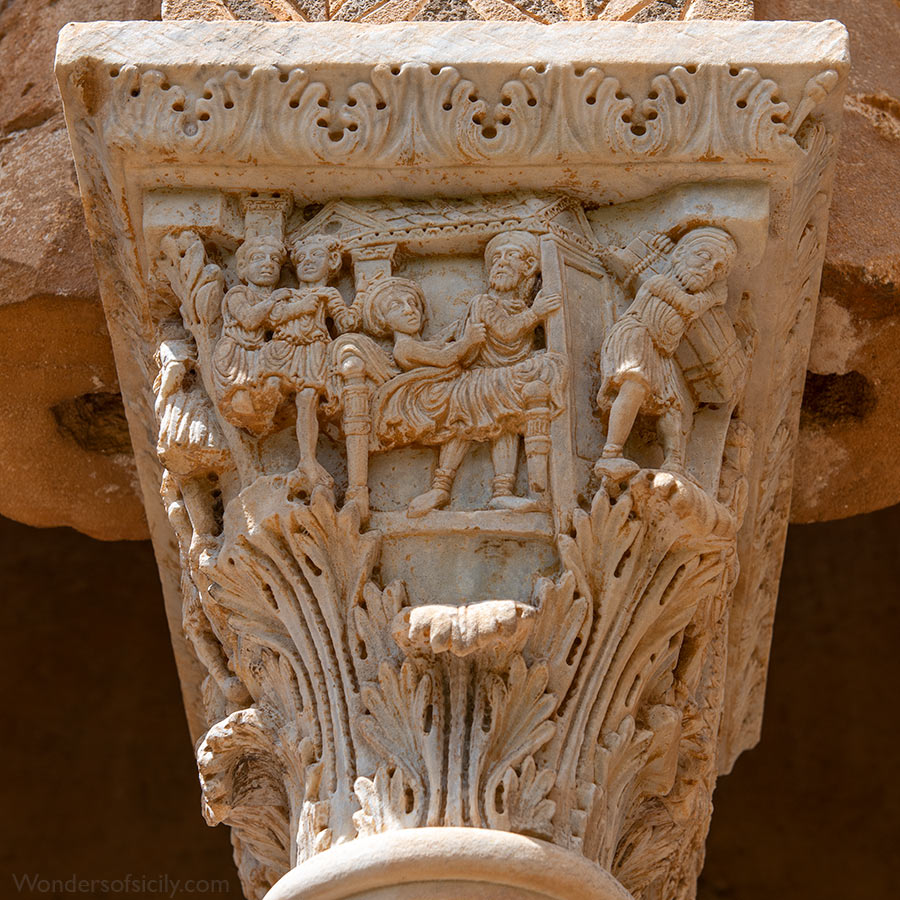
While Samson is visiting a prostitute (center), the townspeople plan to ambush Samson (left) at the city gate. Samson leaves during the night, lifts the gate from its hinges (right), and takes it with him.
Judges 16:1-3 (King James Version): 16:1 Then went Samson to Gaza, and saw there an harlot, and went in unto her. 2 And it was told the Gazites, saying, Samson is come hither. And they compassed him in, and laid wait for him all night in the gate of the city, and were quiet all the night, saying, In the morning, when it is day, we shall kill him. 3 And Samson lay till midnight, and arose at midnight, and took the doors of the gate of the city, and the two posts, and went away with them, bar and all, and put them upon his shoulders, and carried them up to the top of an hill that is before Hebron.
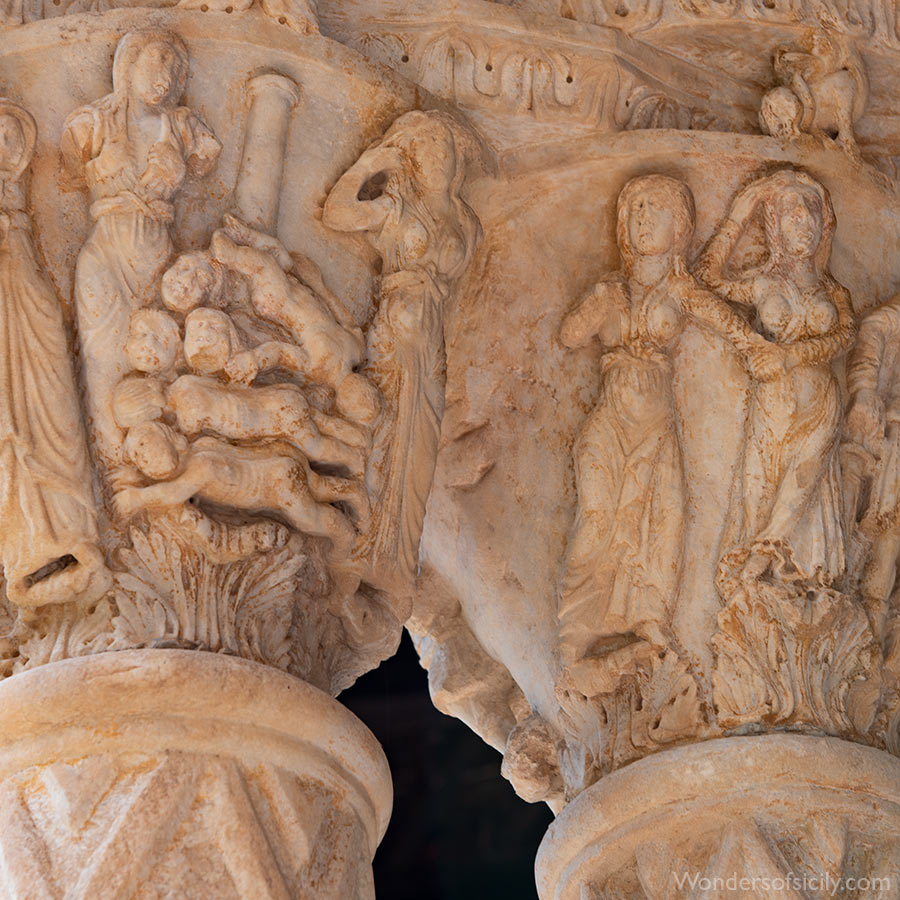
The Massacre in Betlehem.
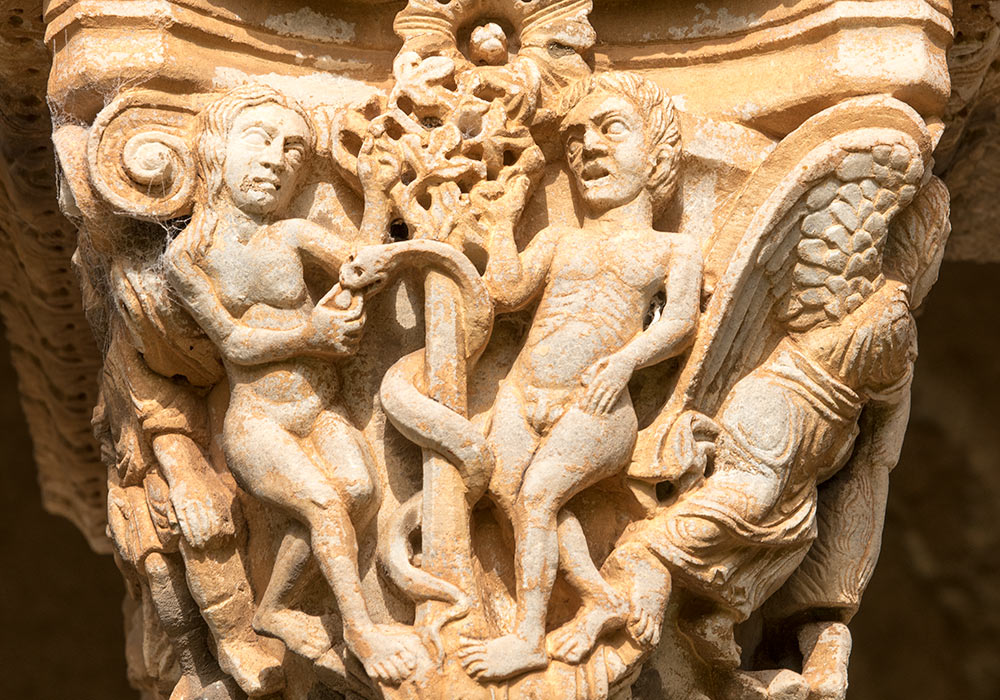
Adam and Eve are shown naked next to the Tree of Knowledge. Eve reaches for the forbidden fruit.
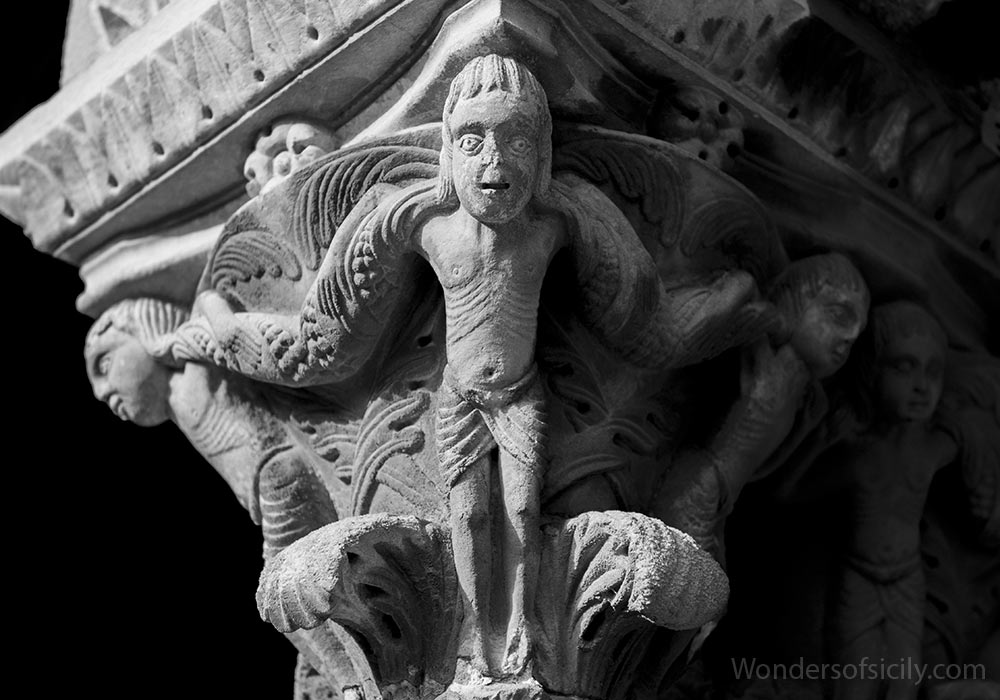
Capital Monreale Cloister.
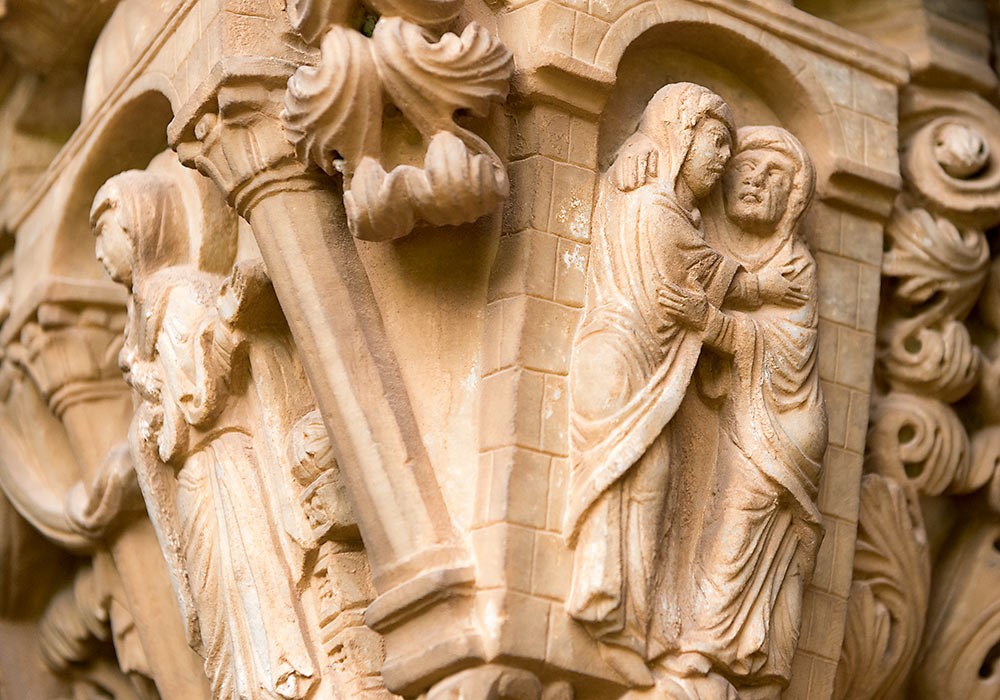
The Virgin Mary visits Elizabeth.
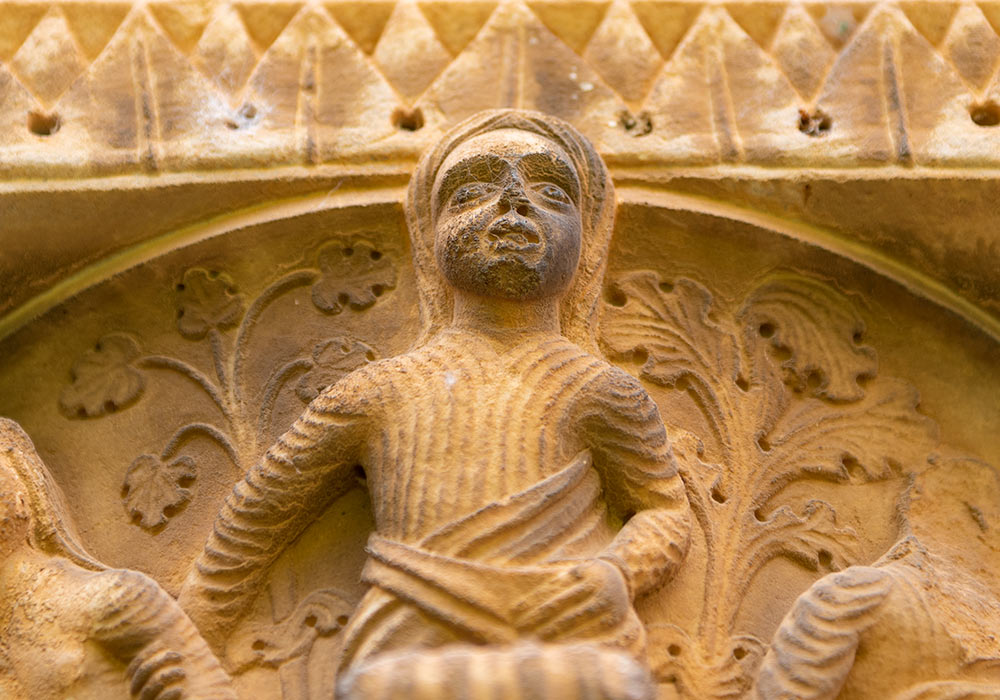
Detail on a capital.
Jean Paul Barreaud:
Docs, Reportages, Photos and Tours of Palermo.
Click here to book or read more!
The Columns
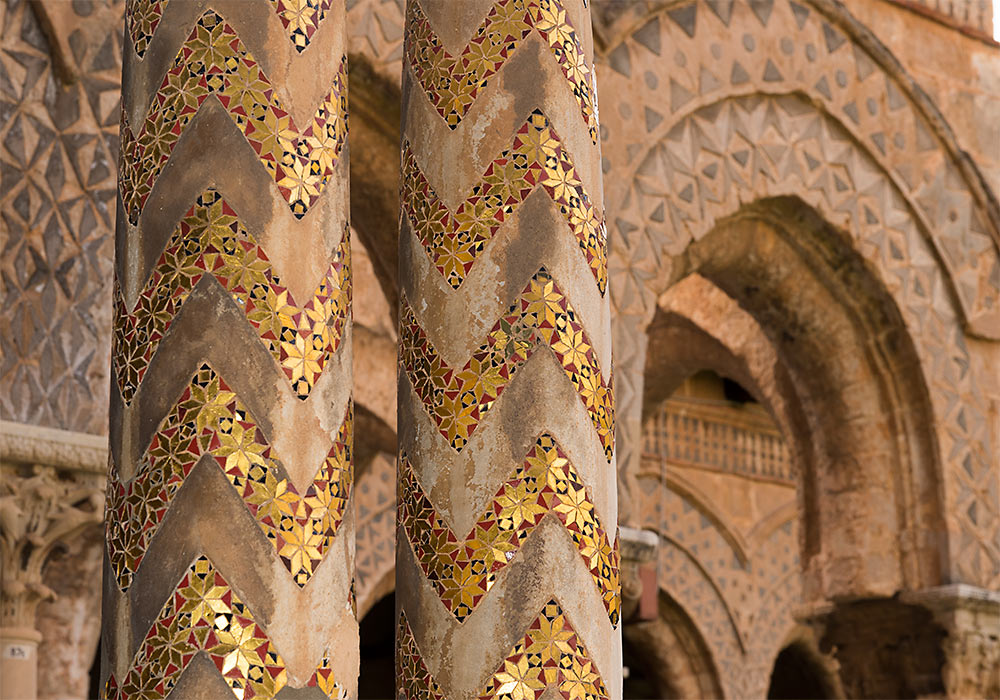
Many of the columns are richly decorated, inlaid with colored stones.
Some of the columns have beautifully carved ornaments with various motives.
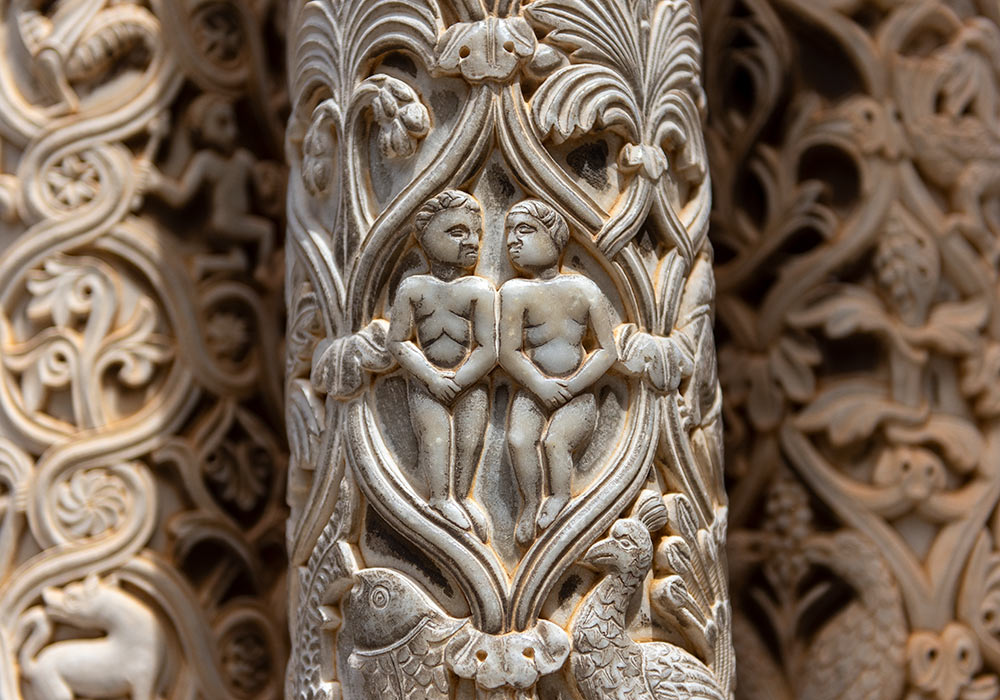
Close-up of Adam and Eve on one of the columns.
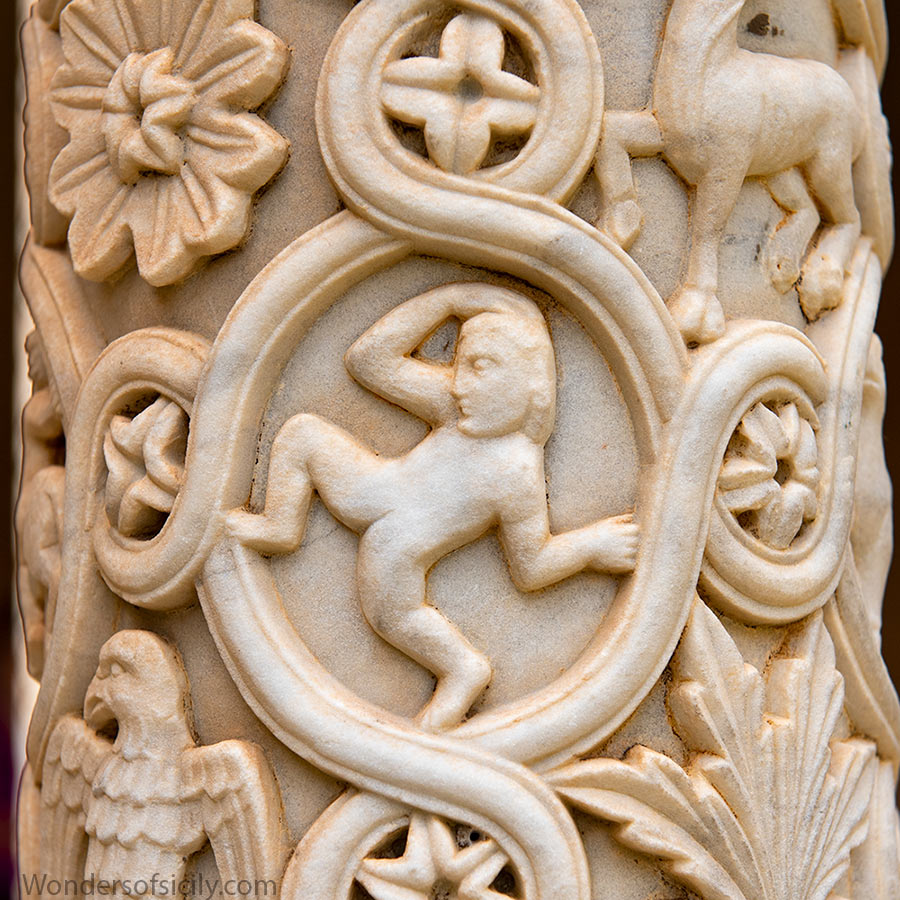
Detail on one of the columns.
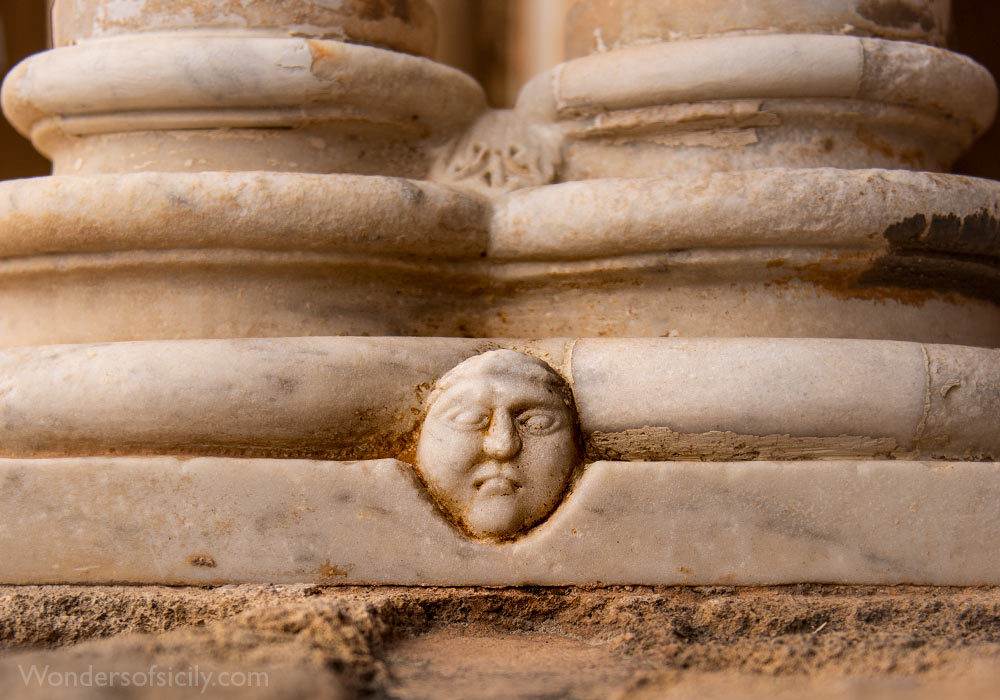
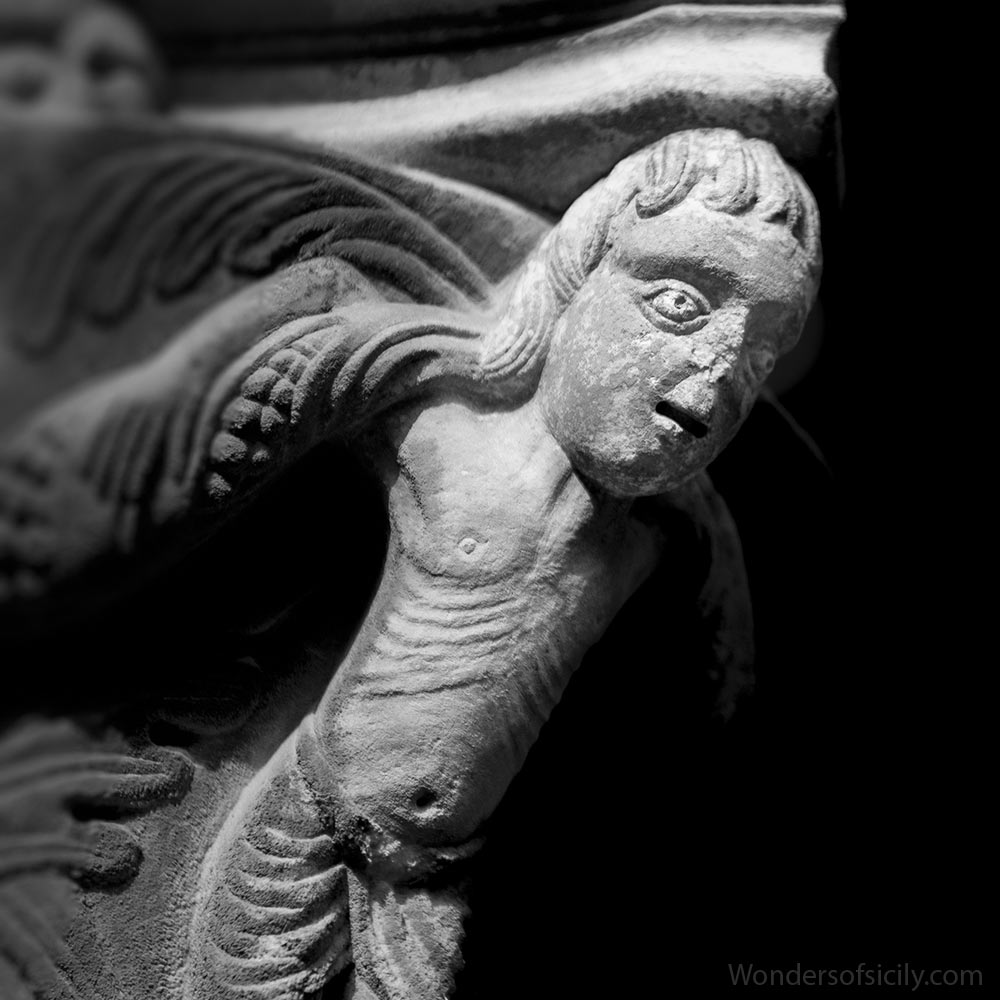
This funny face is located at the base of one of the columns.
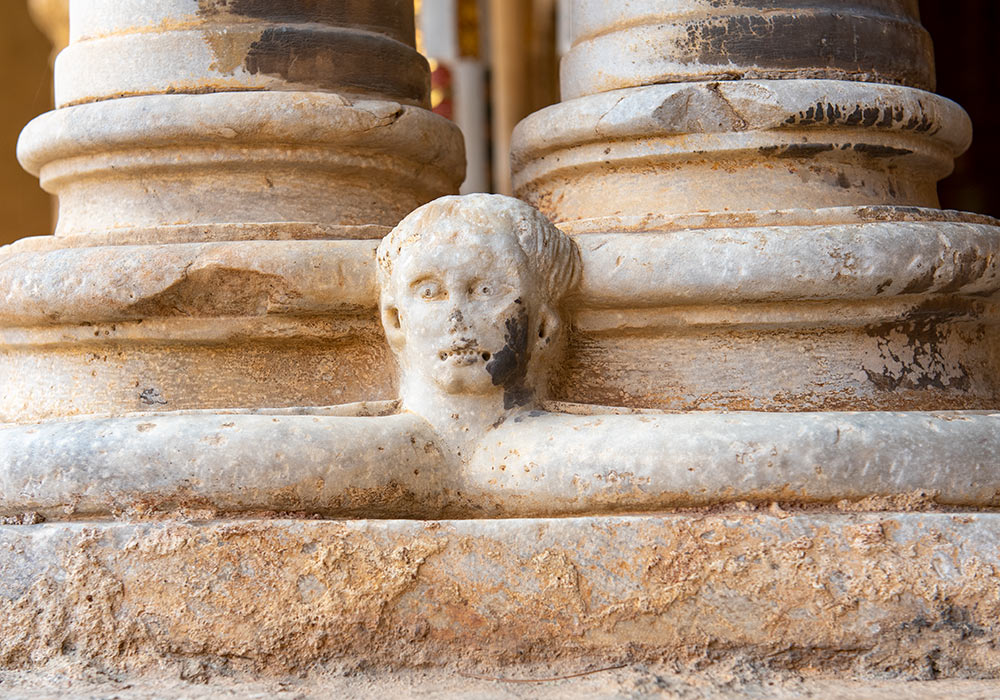
Another funny face at the base of one of the columns.
The Cathedral in Monreale (Duomo)
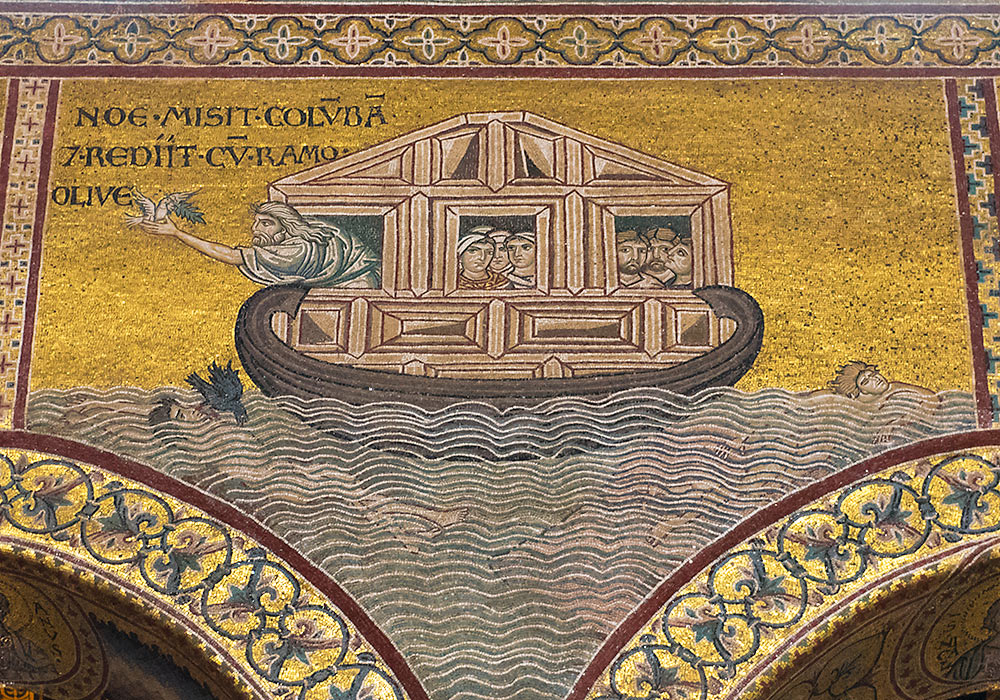
Mosaics on the south wall: Cycle of the Old Testament.
Click here to see photos of the Monreale Cathedral
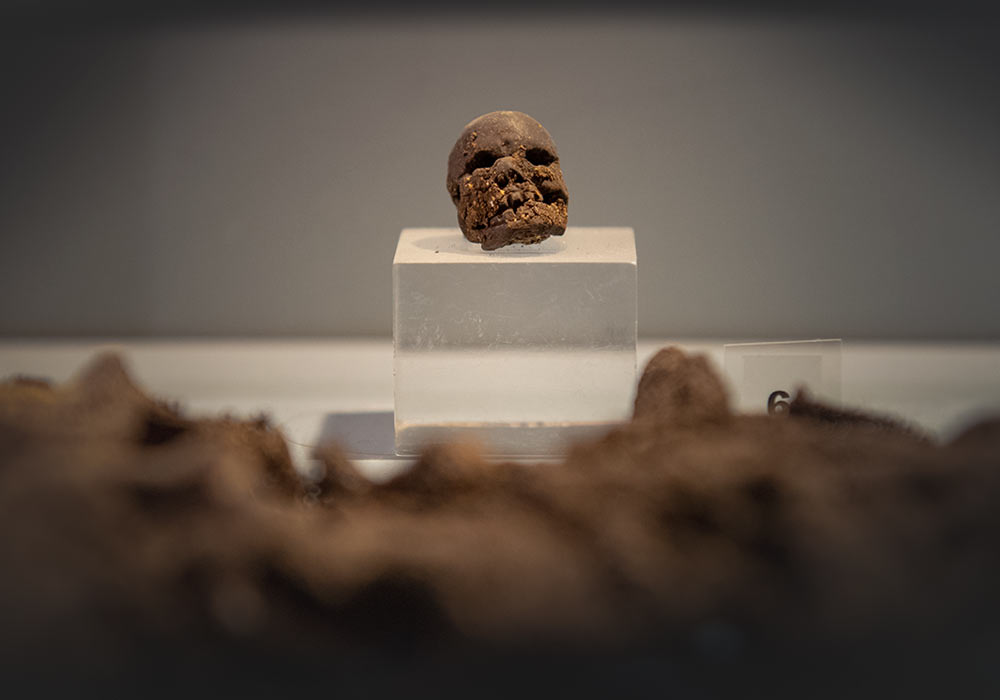
Gravegoods: This small wooden skull (c. 2 cm) was found in the folds of an undergarment. Maybe it was hung as a pendant. (In the small museum next to the cloister.)
UNESCO’s World Heritage List
Arab-Norman Palermo and the Cathedral Churches of Cefalú and Monreale (Italy) - new on the list (2015)
Located on the northern coast of Sicily, Arab-Norman Palermo includes a series of nine civil and religious structures dating from the era of the Norman kingdom of Sicily (1130-1194): two palaces, three churches, a cathedral, a bridge, as well as the cathedrals of Cefalú and Monreale. Collectively, they are an example of a social-cultural syncretism between Western, Islamic and Byzantine cultures on the island which gave rise to new concepts of space, structure and decoration. They also bear testimony to the fruitful coexistence of people of different origins and religions (Muslim, Byzantine, Latin, Jewish, Lombard and French).
Palermo
- Palazzo dei Normanni (The Norman Palace)
- Cappella Palatina (The Palatine Chapel in the Norman Palace)
- Church of San Giovanni degli Eremiti
- Church of Santa Maria dell'Ammiraglio (also known as the Martorana)
- Church of San Cataldo
- Cathedral of Palermo
- The Zisa Palace (La Zisa)
- The Cuba Palace (La Cuba)
Norman Cathedrals
Sources
- Lisa Sciortino: The Cathedral of Monreale
- Ellen Grady: Blue Guide Sicily