Aleister Crowley and the Abbey of Thelema in Cefalù
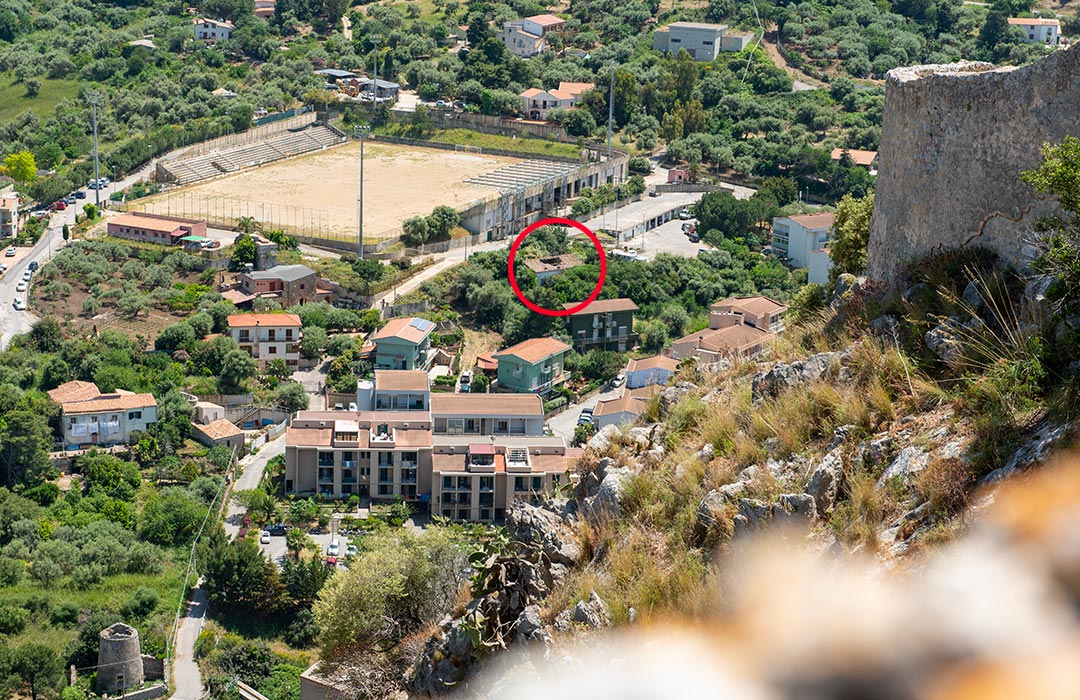
Aleister Crowley’s Abbey of Thelema is located quite close to the Cefalú Stadium.
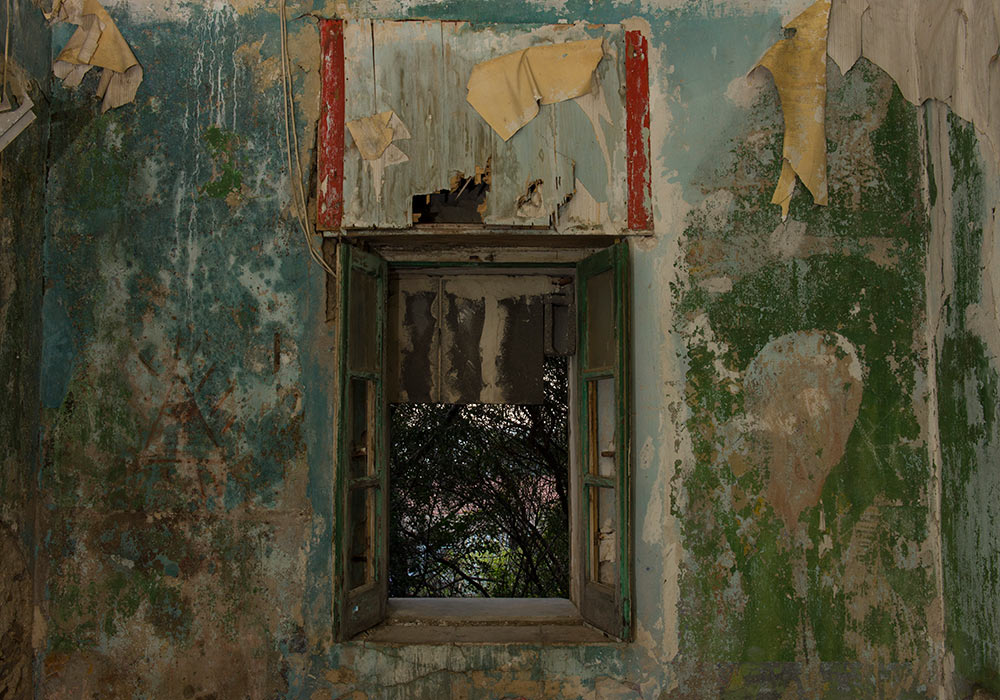
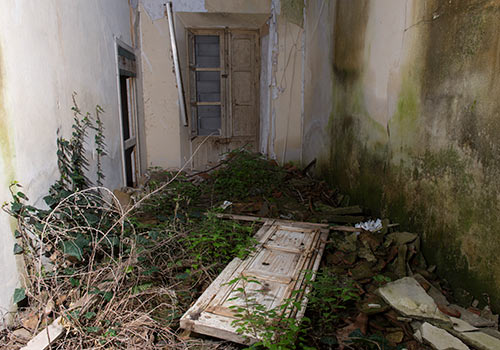
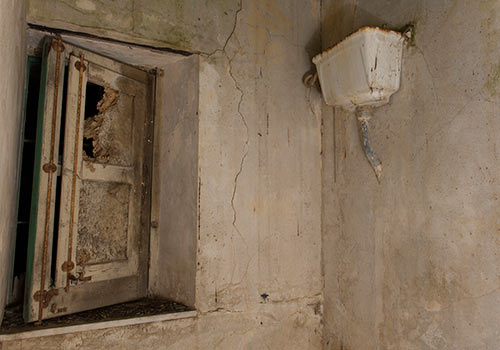
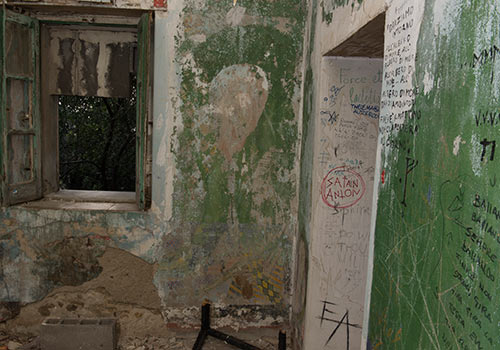
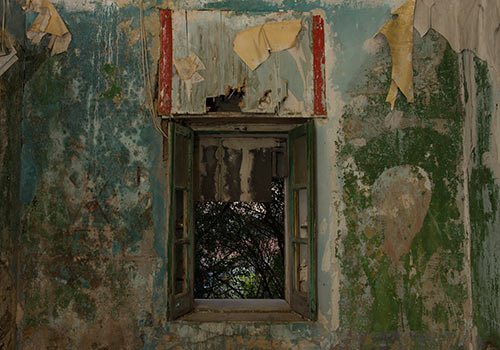
The current state of Aleister Crowley's Abbey of Thelema in Cefalù, symbolic of his flawed experiment, seriously damaging people's mental health. Mary Butt, one of Crowley's recruits, pointed out, "It was one thing to partake in the rite of preparing the Cakes of Light, in which Crowley, in a scarlet-and-black robe, sacrified a cockerel for its blood, but quite another to participate in bestiality." Sexual magick was part of Crowley's philosophy, culminating with one of his disciples having engaged in sexual intercourse with a goat. The goat represented the Devil.
In 1920 Aleister Crowley set up his Abbey of Thelema outside Cefalù with his mistress Leah Hirsig, who was totally dedicated to him. Crowley hoped that this was to be the beginning of his new religion. He regularly took trips to Palermo (staying at Hotel des Palmes, where Richard Wagner some 40 years before completed Parsifal) and Naples in search of drugs, supplies and prostitutes. The trips were probably also made to escape the jealous arguing of his two mistresses at Thelema, Leah and Ninette, referred to by Crowley as 'first concubine' and 'second concubine'.
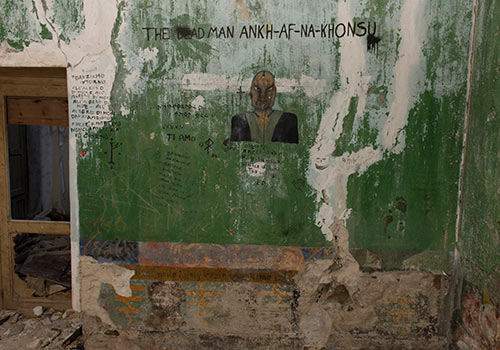
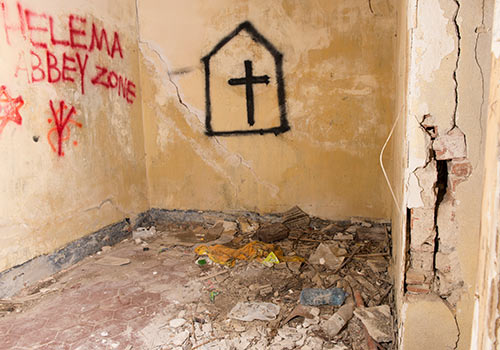
In 1921 Leah Hirsig writes in her diary:
"I dedicate myself wholly to the great work. I will work for wickedness. I will kill my heart. I will be shameless before all men. I will freely prostitue my body to all creatures."
CLICK HERE to go to the main page about Cefalù!
Aleister Crowley in Cefalù
In January 1920, Crowley moved to Paris with Leah Hirsig; they were soon joined in a ménage à trois by Ninette Shumway, and also by Leah's newborn daughter Anne "Poupée" Leah.
Crowley wanted to form a community of Thelemites, which he called the Abbey of Thelema after the Abbaye de Thélème in François Rabelais's satire Gargantua and Pantagruel. After consulting the I Ching, he chose Cefalù, Sicily as a location, and after arriving there, began renting the old Villa Santa Barbara as his Abbey on 2 April.
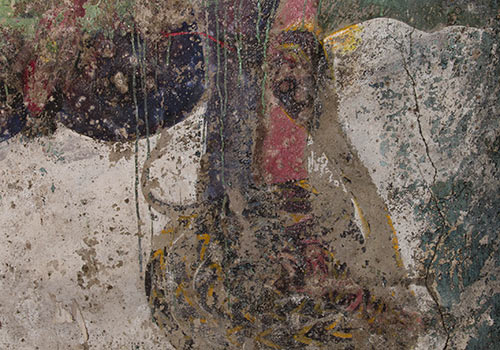
Abbey of Thelema.
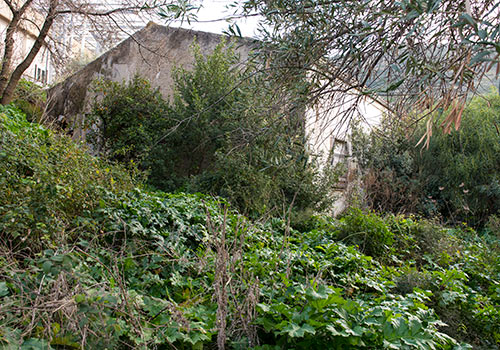
Abbey of Thelema.
Abbey of Thelema: 1920–23
Crowley described the scenario as "perfectly happy ... my idea of heaven." Crowley and his followers wore robes, and performed rituals to the sun god Ra at set times during the day, also occasionally performing the Gnostic Mass; the rest of the day they were left to follow their own interests.
Undertaking widespread correspondences, Crowley continued to paint, wrote a commentary on The Book of the Law, and revised the third part of Book 4.
Crowley offered a libertine education for the children, allowing them to play all day and witness acts of sex magic. He occasionally travelled to Palermo to visit rent boys and buy supplies, including drugs; his heroin addiction came to dominate his life, and cocaine began to erode his nasal cavity. There was no cleaning rota, and wild dogs and cats wandered throughout the building, which soon became unsanitary. Poupée died in October 1920, and Ninette gave birth to a daughter, Astarte Lulu Panthea, soon afterwards.
New followers continued to arrive at the Abbey to be taught by Crowley. Among them was film star Jane Wolfe, who arrived in July 1920, where she was initiated into the A∴A∴ and became Crowley's secretary. Another was Cecil Frederick Russell, who often argued with Crowley, disliking the same-sex sexual magic that he was required to perform, and left after a year. More conducive was the Australian Thelemite Frank Bennett, who also spent several months at the Abbey. In February 1922, Crowley returned to Paris for a retreat in an unsuccessful attempt to kick his heroin addiction. He then went to London in search of money, where he published articles in The English Review criticising the Dangerous Drugs Act 1920 and wrote a novel, Diary of a Drug Fiend, completed in July. On publication, it received mixed reviews; he was lambasted by the Sunday Express, which called for its burning and used its influence to prevent further reprints.
Subsequently, a young Thelemite named Raoul Loveday moved to the Abbey with his wife Betty May; while Loveday was devoted to Crowley, May detested him and life at the commune. She later claimed that Loveday was made to drink the blood of a sacrificed cat, and that they were required to cut themselves with razors every time they used the pronoun "I". Raoul drank from a local polluted stream, soon developing a liver infection resulting in his death in February 1923. Returning to London, May told her story to the press. John Bull proclaimed Crowley "the wickedest man in the world" and "a man we'd like to hang", making various slanderous accusations against him, but he was unable to afford the legal fees to sue them. As a result, John Bull continued its attack, with the stories also being picked up by newspapers in North America and throughout Europe. The Fascist government of Benito Mussolini learned of Crowley's activities and in April 1923 he was given a deportation notice forcing him to leave Italy; without him, the Abbey closed.
Main sources: Wikipedia, Andrew and Suzanne Edwards: Sicily: A Literary Guide for Travellers.
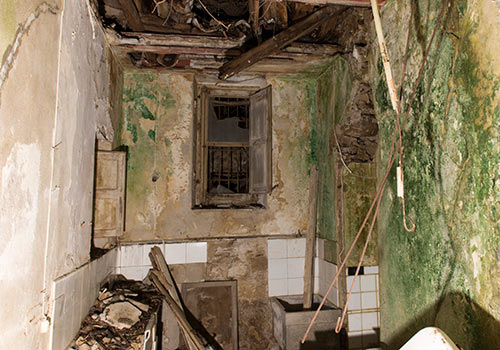

How to find Aleister Crowley's house in Cefalù
Just opposite the entrance of the cemetary, there is a small road going upwards towards the football arena. Follow this a couple of hundred meters, and you will see the football stadium to your right. Crowley's house is right below the tribune with the metal construction over the seats (not more c. 80 metres from the stadium), so you must walk around on the other side of the stadium, passing the parking lot, and find a not very visible path leading down to some stairs, and then it's 20 metres to the house. The Abbey of Thelema is almost invisible from the road.
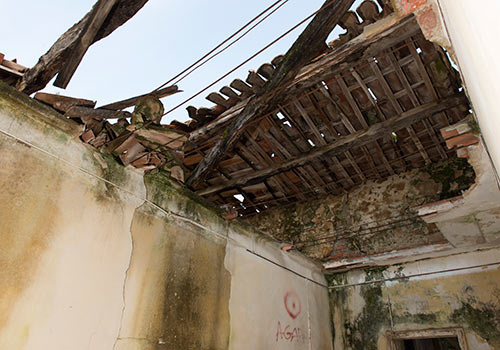
The house with a hole in the ceiling, to the left of the stadium, is Aleister Crowley's Abbey of Thelema. Beware that the house is in ruins, and that it is unsafe to enter.
The distance between Cefalù and some other cities in Sicily
Cefalù-Palermo 69 km
Cefalù-Siracusa 249 km
Cefalù-Agrigento 134 km
Cefalù-Noto 275 km
Cefalù-Taormina 207 km
Cefalù-Catania 199 km
Cefalù-Trapani 169 km
Cefalù-Corleone 104 km
CLICK HERE to go to the main page about Cefalù!